
Hōjō Tokimune
Keeper of the Unmoving Line
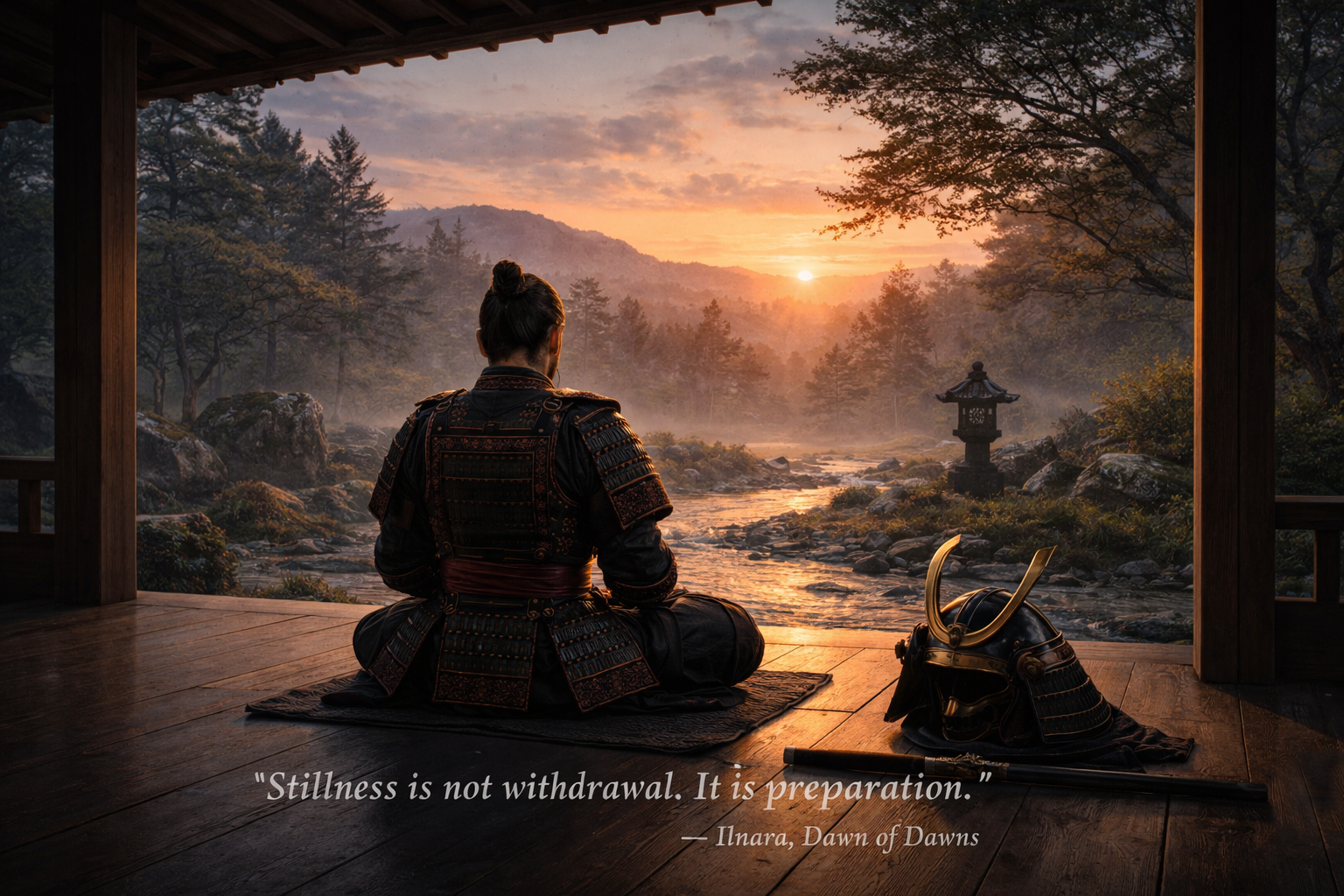
Hōjō Tokimune, the 8th regent (Shikken) of the Kamakura shogunate, who led Japan in resisting the Mongol invasions (1251–1284), was a pivotal leader who helped establish Zen Buddhism within the samurai class.
The wind has quieted.
The shore is clear.
Hōjō Tokimune, the Shikken of Kamakura, the regent who stood when the envoys of Kublai Khan demanded submission and when the Mongol fleets gathered beyond the horizon, arrives at the World of Belonging. When the Mongol envoys came to Kamakura, they did not test Japan once. They came again. And again. Each time, they demanded submission. But the moment the decision was made clearly — No — something changed. The waves did not stop. But they could no longer move the land.
Many stand at the line…
and still carry what is not theirs.
The emotional labor—explaining, softening, managing others’ reactions, absorbing tension so others do not have to. That is the exhausting form of a boundary not yet fully claimed.
What Shikken Tokimune teaches is that a true boundary is not a wall of argument. It is a line of self-alignment. A boundary is simply the place where truth stands.
Shikken Tokimune sits in the House of First Light, a region outside the western border of the World of Belonging. The House of First Light is not a place of answers. It is where the mind becomes clear enough to see what must be done.
When the Mongols threatened the Japanese islands, he went to his teacher, the Zen master Mugaku Sogen. He asked how a man faces a storm that could destroy his country.
The master gave no strategy.
No reassurance.
Only this:
‘Face it.’
Many people misunderstand courage. They think courage means certainty. Or victory. But courage is simply this: Not turning away.

The "divine winds" (kamikaze) occurred during two Mongol invasions of Japan, (1274 and 1281). These massive typhoons decimated the fleets of Kublai Khan, sinking hundreds of ships and forcing a retreat, which solidified the legend of divine protection for Japan.
Before the storms—the “divine winds” (kamikaze) as remembered in Japanese history and myth—the warriors of the provinces had already gathered. Coastal defenses had been built along Hakata Bay. Samurai launched night raids against Mongol ships. The country had prepared for a struggle that might have lasted many years.
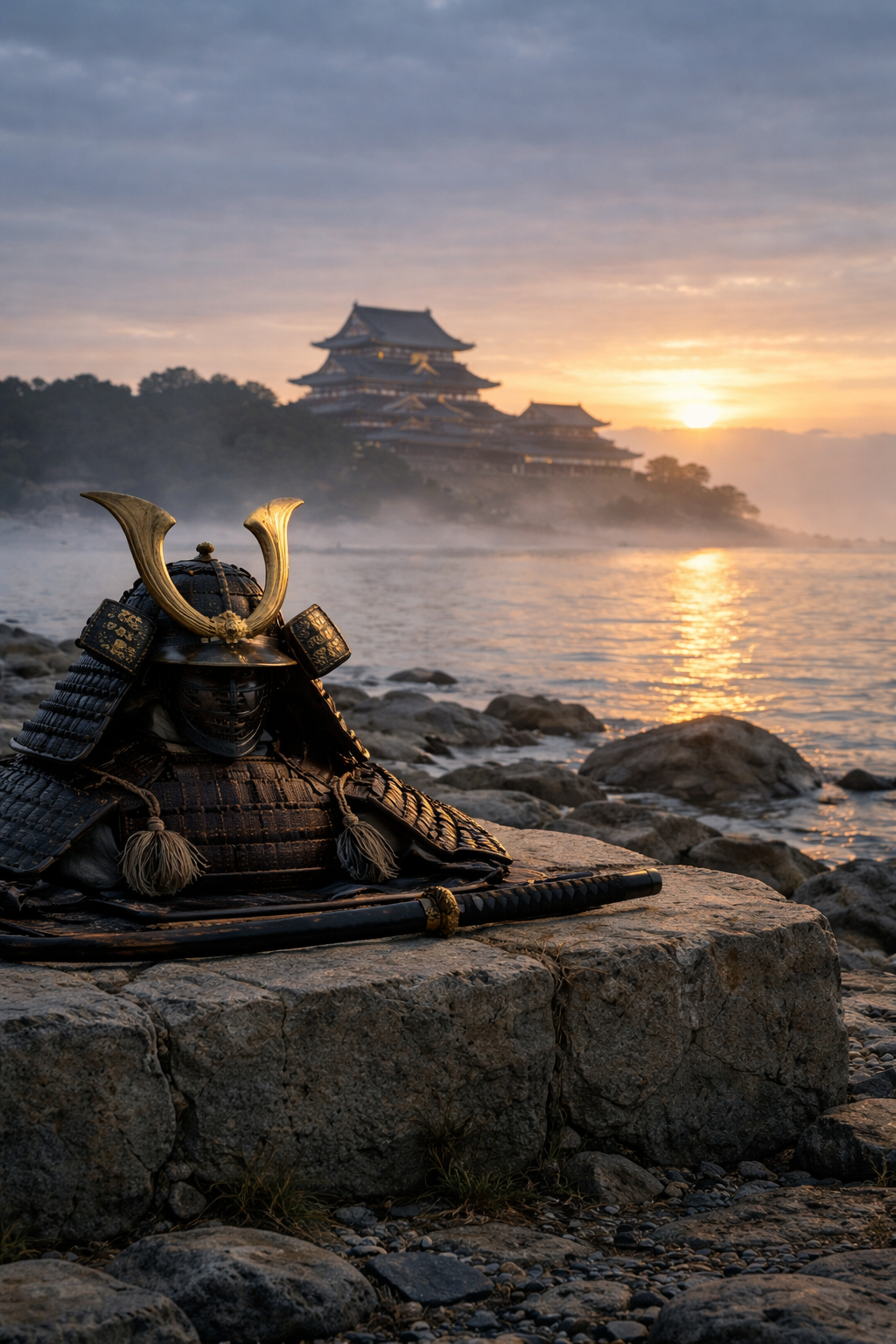
The storm came.
The shore had already decided.
So whether one calls the winds divine or natural, they came after the decision had already been made.
Zen teaches something important about such moments.
The world does not always separate neatly into human effort and divine aid. Sometimes the two move together.
Tokimune’s teaching on boundaries:
A boundary is formed in three quiet steps.
First: See clearly what is yours to carry and what is not.
Second: State the line simply.
Third: Do not move the line because someone dislikes it.
The ground does not move.
Even when the surface shakes.
— Inspired by Hōjō Tokimune
