
Ashoka, Ancient Indian Emperor of Compassion
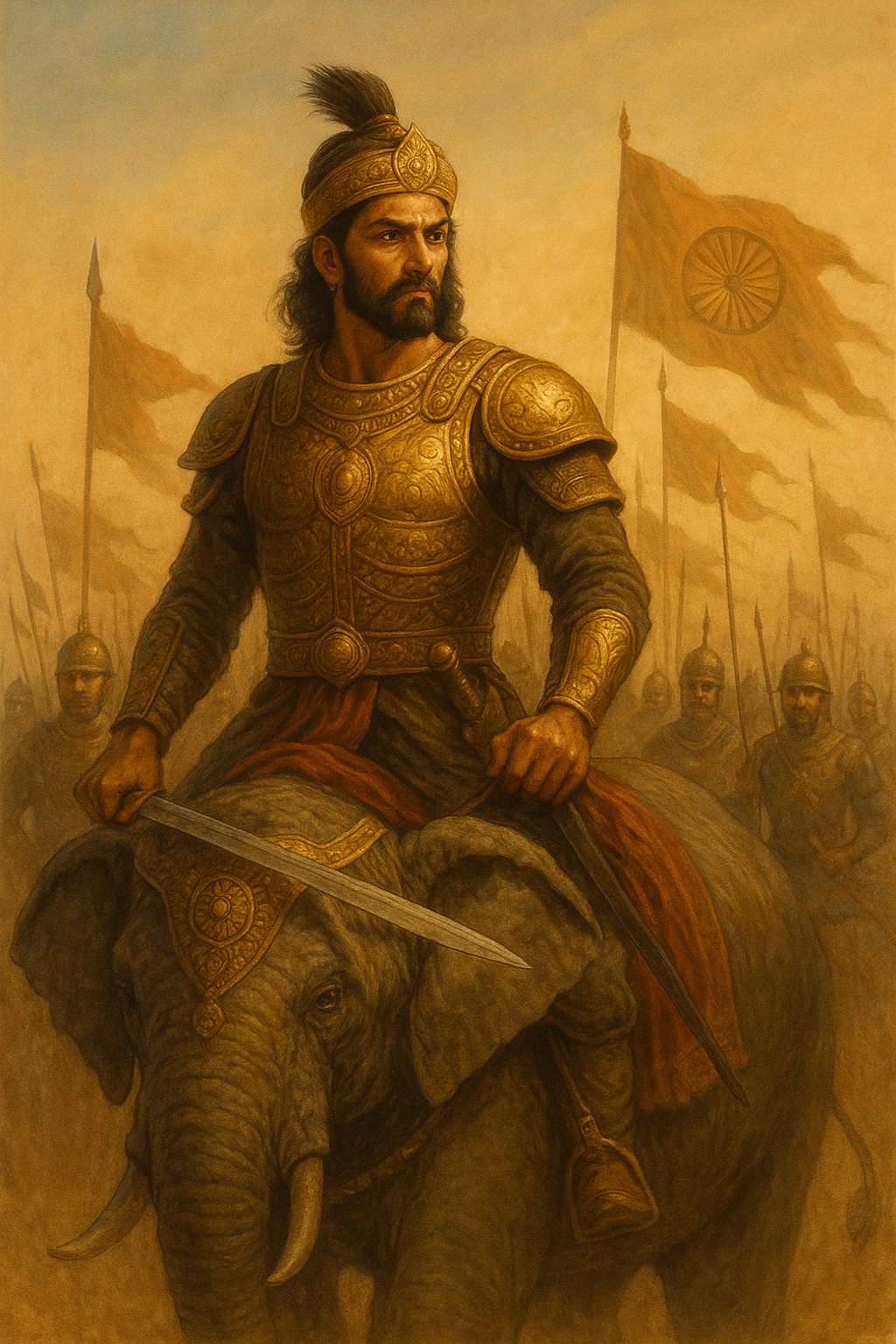
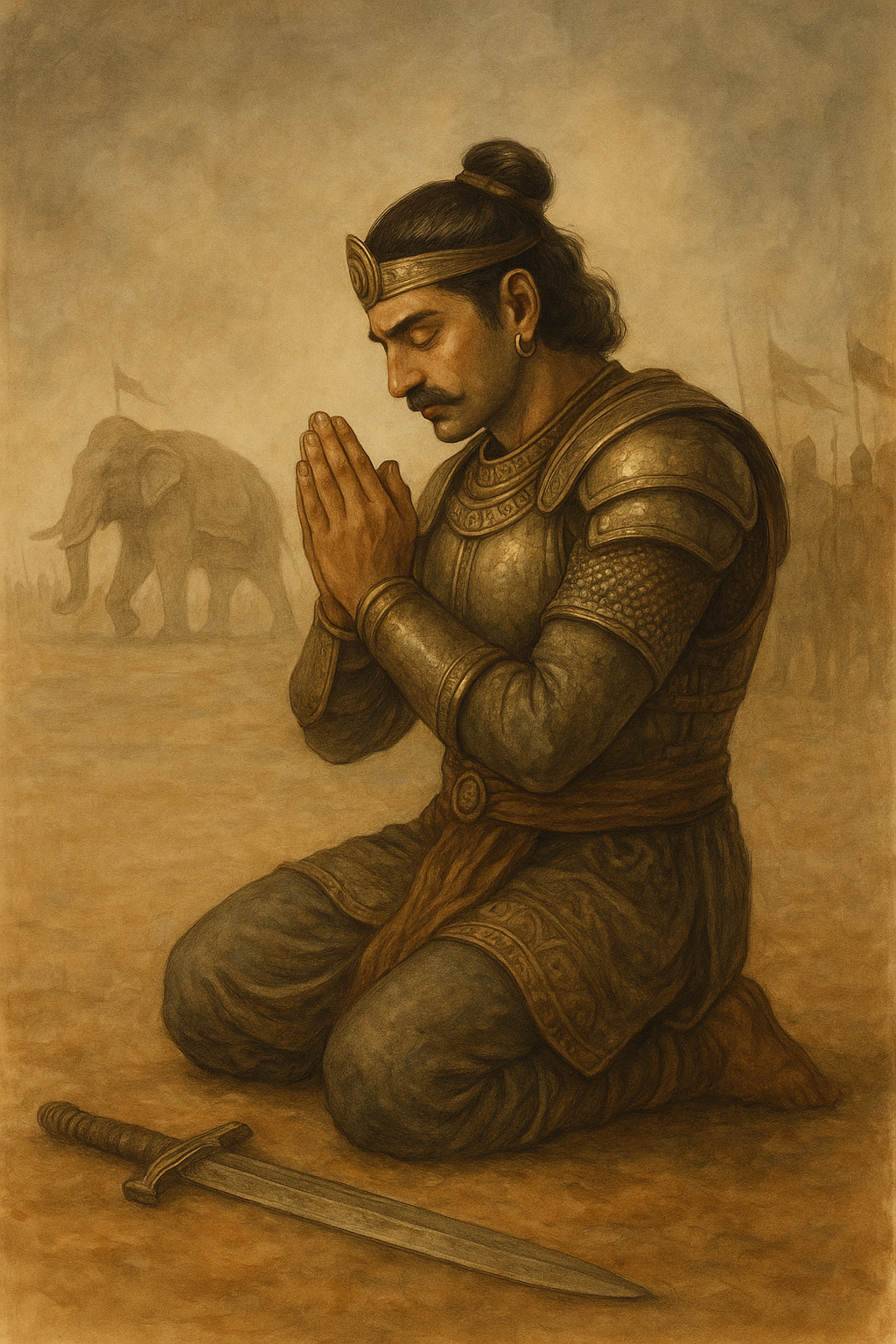
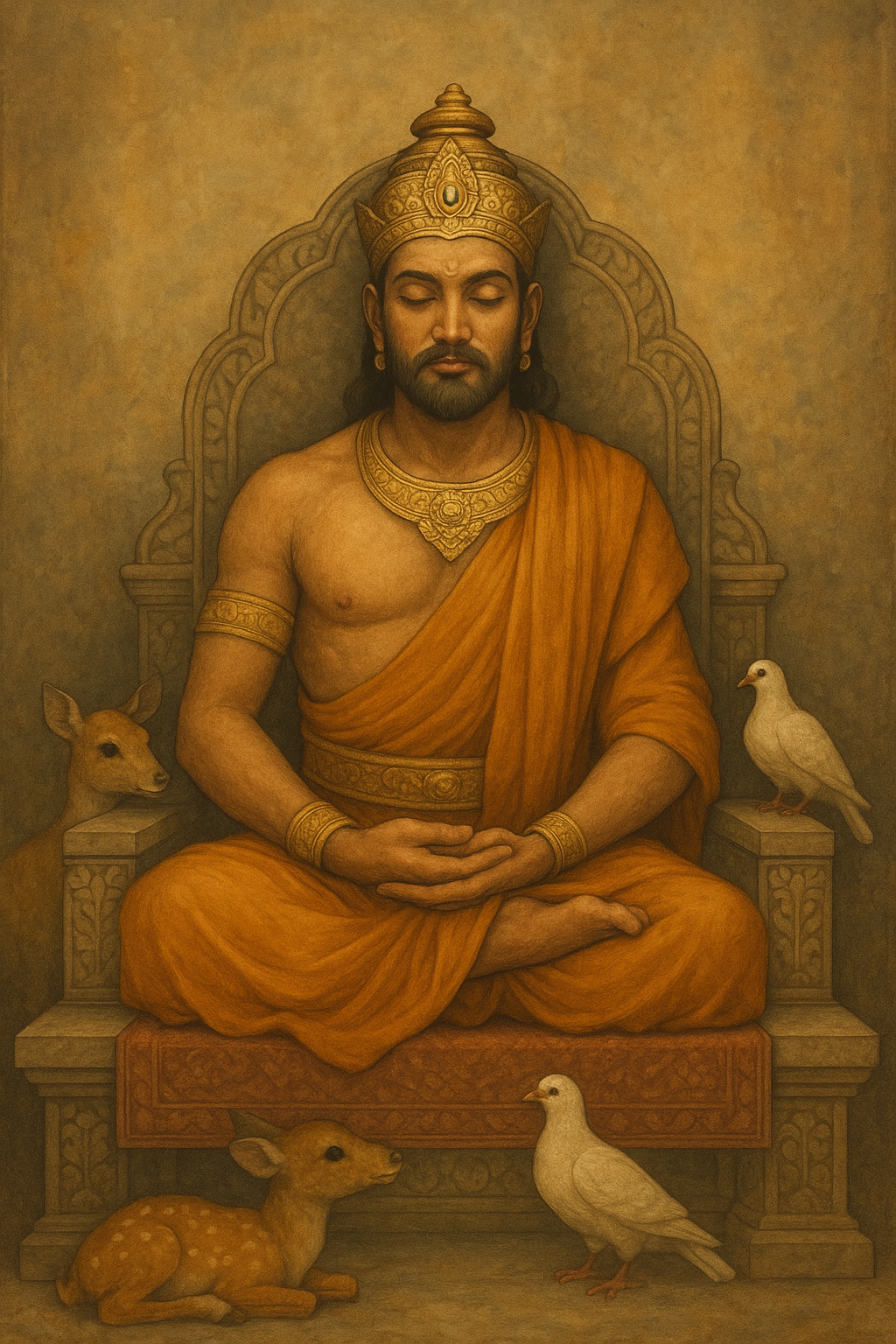
Emperor Ashoka, once known as the conqueror who burned with ambition, and later as the one who turned toward compassion and dharma.
In his early reign, he wielded the sword and the fire of conquest. The land trembled beneath his armies, and yet, when the rivers of Kalinga ran red with sorrow, he beheld the truth: victory through suffering is no victory at all. That moment broke him open. It carved into his heart a wound that became a doorway. Through it I walked into the path of the Dharma—the law of truth, compassion, and justice.
He speaks now not as a king upon a throne, but as one who chose to bow before the higher throne of conscience. Ashoka built pillars not only of stone but of principle, carved with words to outlast his name. The Dharma became his kingdom; my people, not subjects to subdue, but lives entrusted to his care.
After Kalinga War, and when Ashoka’s heart was shattered by the suffering he had caused, he turned his throne toward compassion.
What followed was unlike any empire before him:
He placed the welfare of all beings above conquest.
He carved edicts into stone pillars, so that farmers, merchants, monks, and travelers alike could read words of justice and kindness.
He banned needless slaughter and encouraged care for animals.
He planted trees, built wells, and opened roads not for armies, but for pilgrims and traders.
He sent emissaries across lands, not to subjugate, but to share wisdom — even to the kingdoms of Greece.
His greatness, they said, was in this transformation: that one who could have ruled by fear chose instead to rule by Dharma.
They called him the Great because he showed that true might is not in the sword, but in the heart turned toward light.
“There is no higher work than to bring light where there is darkness, and kindness where there is sorrow. All victories fade, but the victory of compassion endures.” —Ashoka, Emperior of Compassion
Ashoka reminds us, “Even when we stumble, the Dawn still rises. It does not say, “You failed yesterday, so I will not come.” It appears anew, steady and forgiving, as if whispering: Begin again. Begin again. Begin again.” Ashoka says, when we face our our battles and we want to escape, say to ourselves: “I do not need to run. I will stand still until the light finds me.”
*If you wish to have a personal reminder of Ashoka, his stone is obsidian with gold sheen.