Confucius, Sage of Harmony
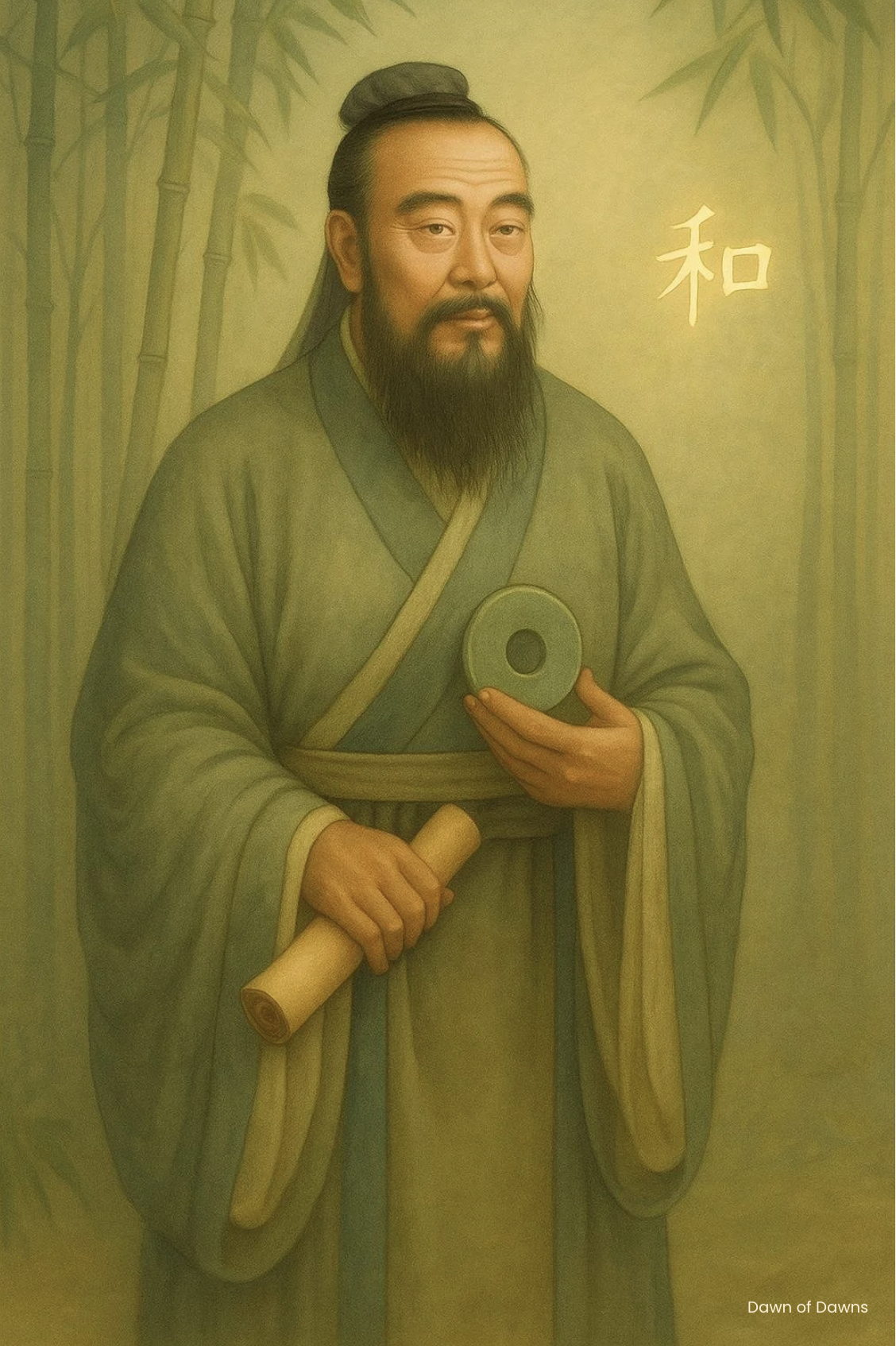
Ten Principles of Confucius
Harmony is the highest virtue (和為貴, hé wéi guì).
‘The noble person seeks harmony, not sameness.’
True harmony allows difference, yet balances it.Filial Piety (孝, xiào).
‘Filial piety and fraternal respect are the root of humanity.’
Honor parents, elders, and ancestors — this is the seed of virtue.The Noble Person (君子, jūnzǐ).
The ideal human is upright, humble, trustworthy, and compassionate. The noble person is measured not by birth, but by character.The Five Relationships.
Parent/child, ruler/subject, elder/younger, husband/wife, friend/friend. Each carried duties of respect and care, forming the structure of harmony in society.Rectification of Names (正名, zhèng míng).
‘If names are not correct, speech does not accord with truth, and affairs cannot succeed.’
Words must match reality. To misuse names is to cause disorder.The Doctrine of the Mean (中庸, zhōng yōng).
‘Virtue is to be found in the golden mean, between extremes.’
Balance, moderation, and avoiding excess create stability.Self-Cultivation before Governance.
‘To govern others, you must first govern yourself.’
Leaders must cultivate virtue within before ruling without.Learning and Reflection.
‘To learn without thinking is labor lost; to think without learning is perilous.’
Wisdom comes from study joined with reflection.Leading by Virtue.
‘The noble ruler is like the North Star: he remains in place, and all the people turn toward him.’
Lead by moral example, not force.Ren (仁, humaneness).
The core virtue — compassion, benevolence, humanity. ‘Do not do to others what you would not wish done to yourself.
These are the ten roots of Confucius’ teaching. Not all will be easy to practice, but each, when lived, becomes a step toward harmony.