 Image 1 of 4
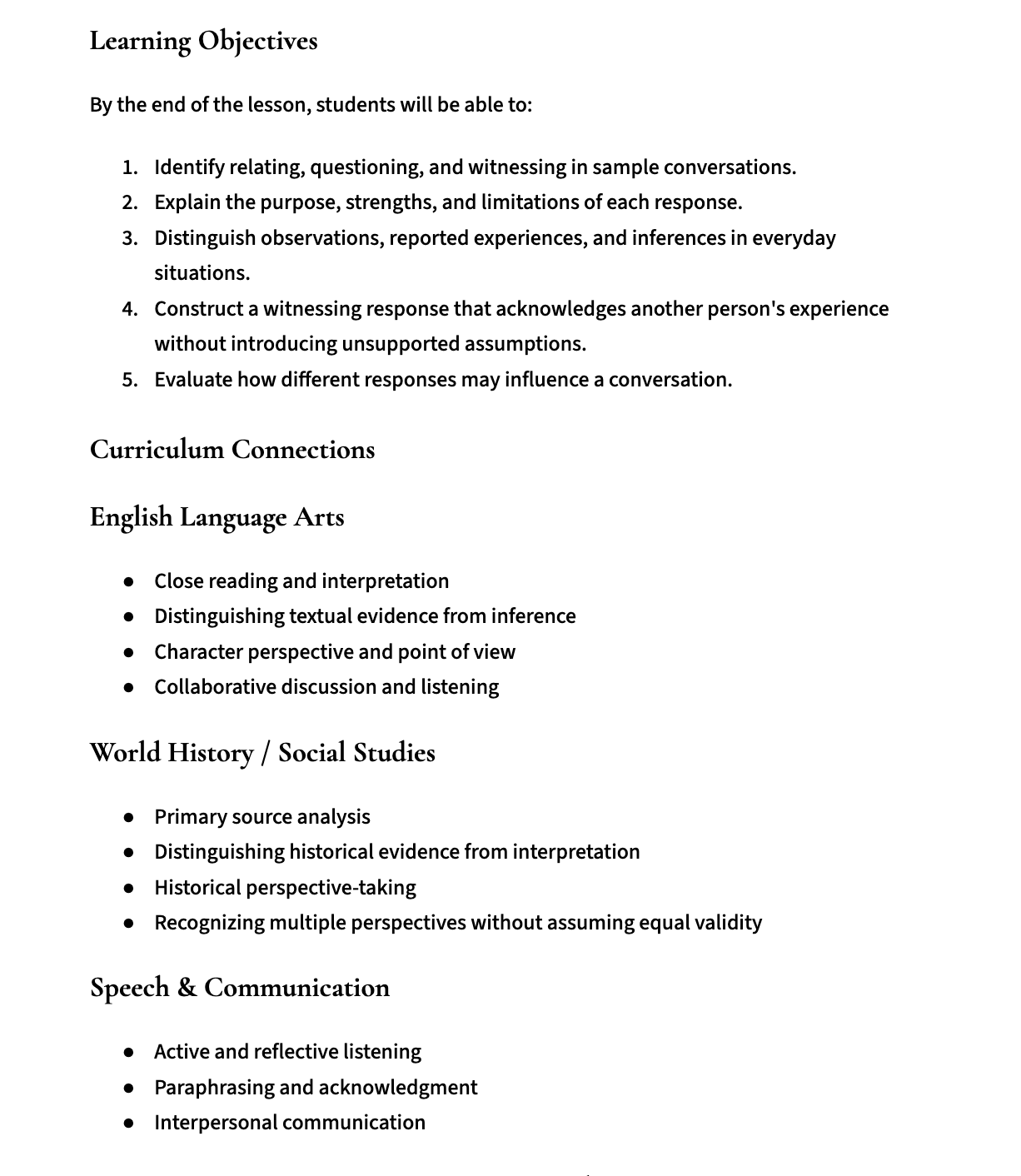 Image 2 of 4
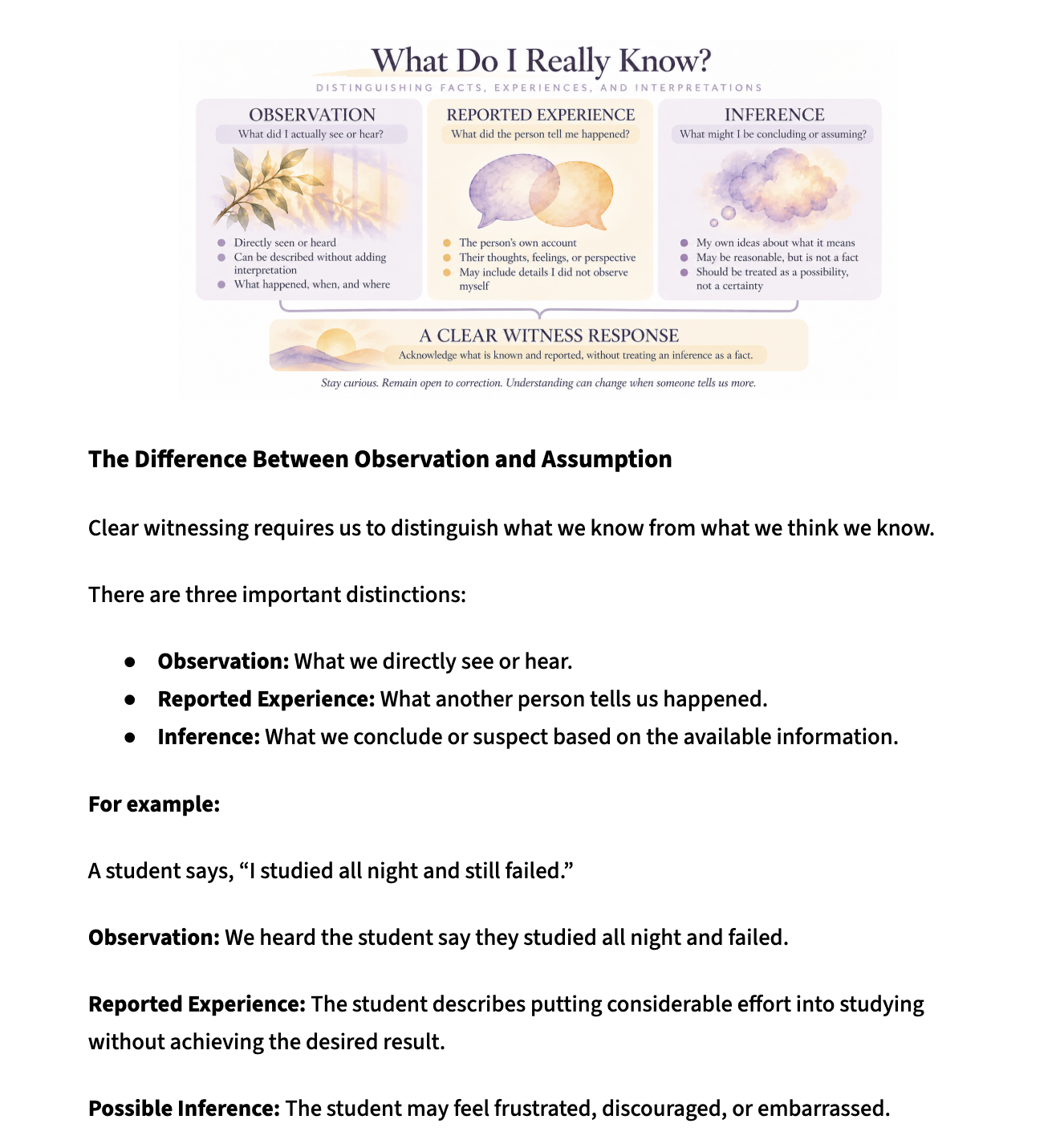 Image 3 of 4
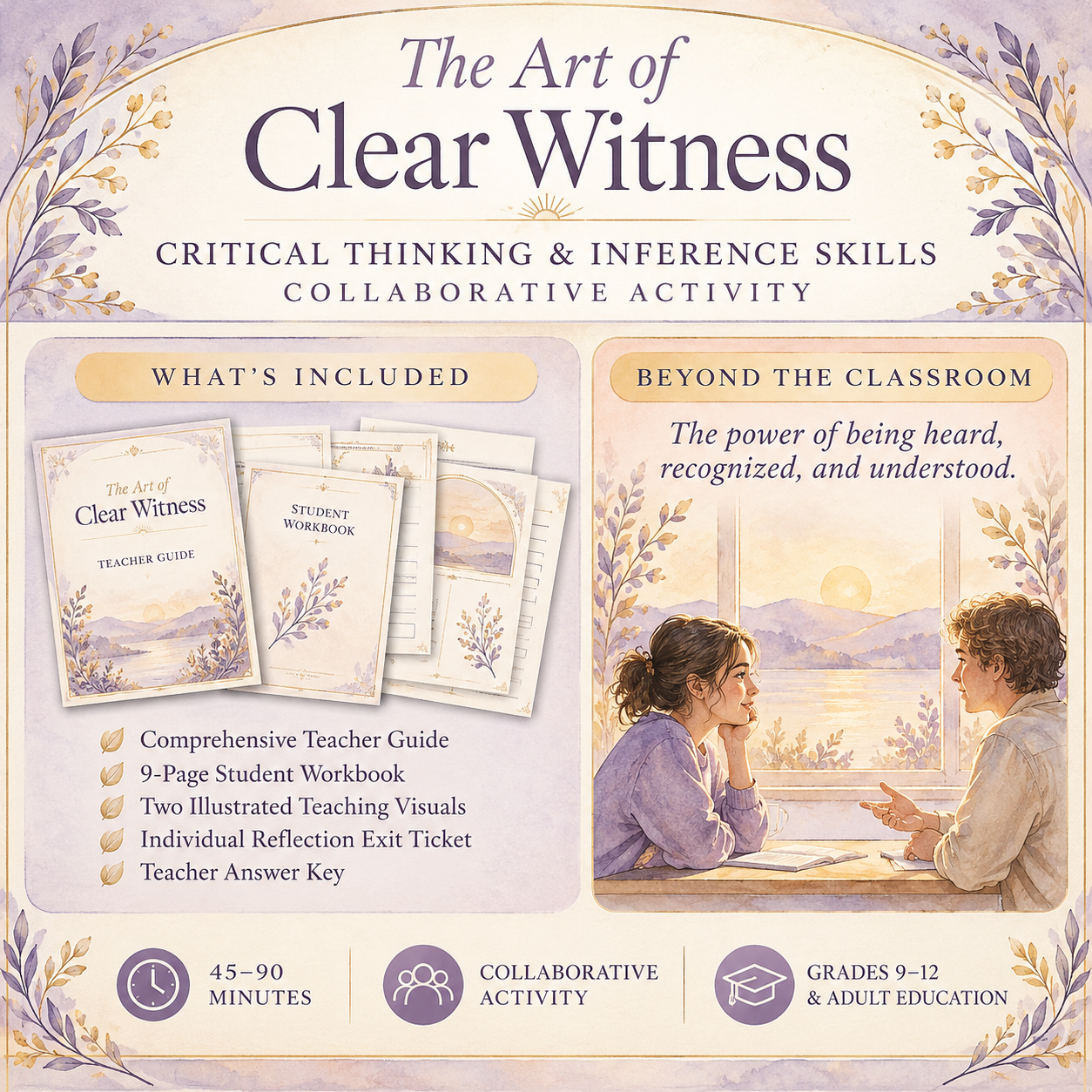 Image 4 of 4
How do we know when we're understanding someone—and when we're simply making assumptions?
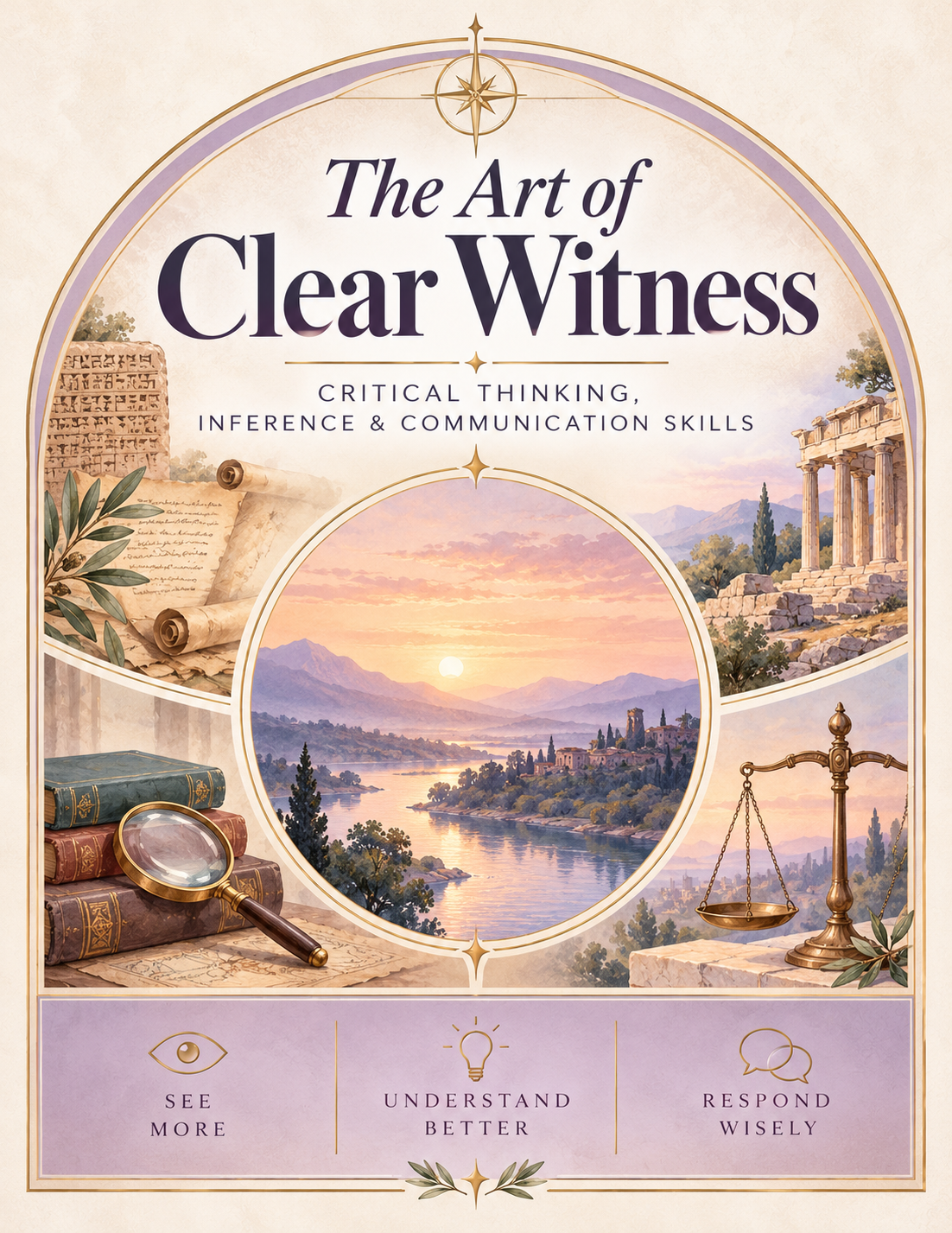
The Art of Clear Witness is a thought-provoking, classroom-ready critical thinking and active listening lesson that helps students strengthen inference skills, recognize unsupported assumptions, consider different perspectives, and communicate with greater clarity.
Students explore the difference between what they observe, what someone reports, and what they infer. Through structured discussion, realistic scenarios, and written reflection, they practice evaluating interpretations, making evidence-based inferences, and considering perspectives beyond their own.
This collaborative learning activity goes beyond everyday communication skills. It develops habits of careful reasoning that support historical inquiry, literary analysis, interpersonal communication, and thoughtful classroom discussion.
What's Included
Comprehensive teacher guide with instructional guidance and learning objectives
9-page student workbook with collaborative activities and written responses
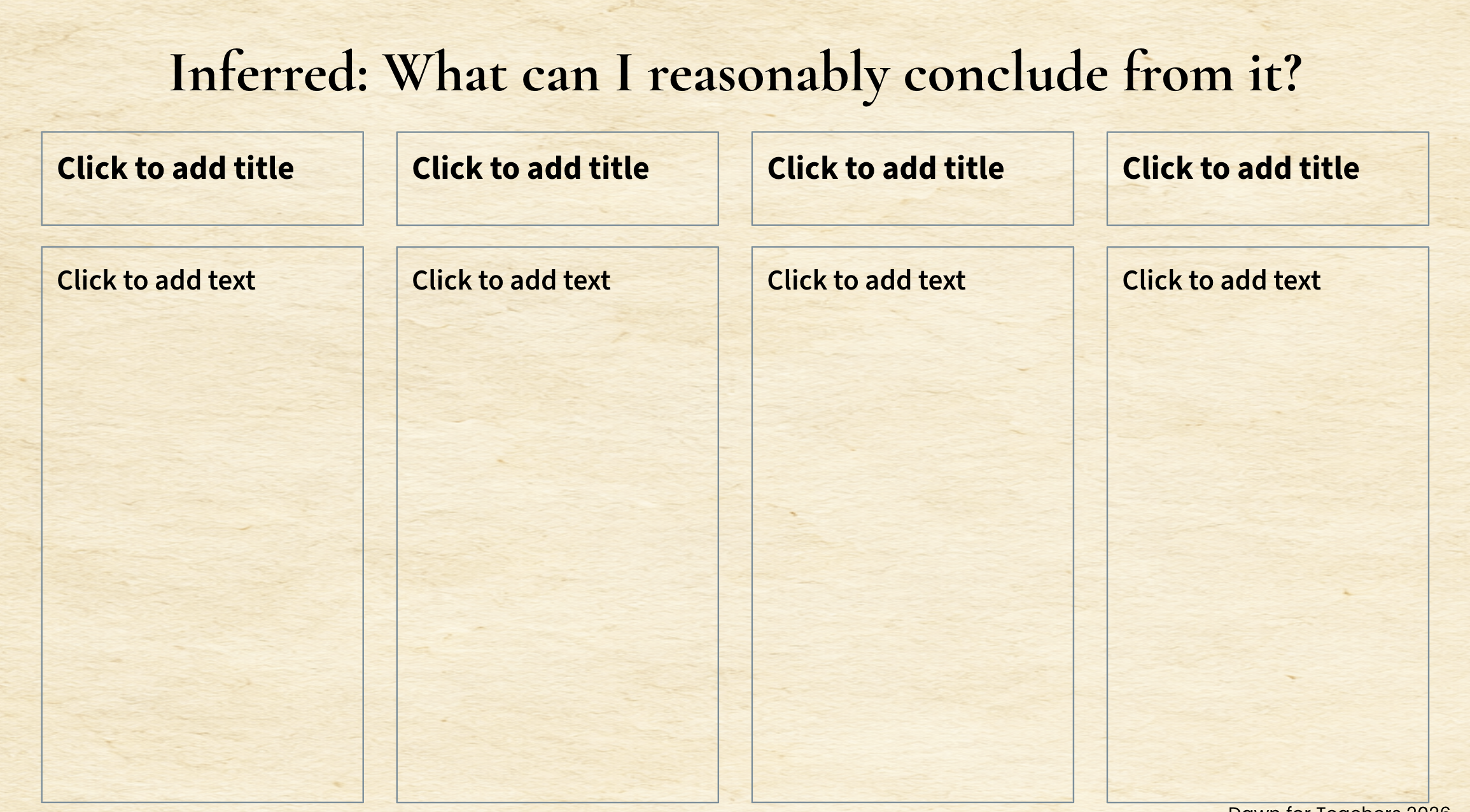
Two illustrated instructional diagrams
Separate individual Final Reflection exit ticket and assessment
Teacher answer key
Skills Developed
Critical thinking and evidence-based inference
Distinguishing observations, reported experiences, and interpretations
Recognizing assumptions and considering alternative explanations
Active listening and perspective-taking
Empathy and respectful communication
Giving and receiving witness: Listening with attention, recognizing another person's experience, and responding without premature assumptions or judgment.
Interpersonal communication and thoughtful discussion
Independent reflection and reasoning
Supports English Learners (EL) and students with ADHD
Perfect For
World History & Social Studies: Strengthen historical thinking skills, evidence-based reasoning, primary-source interpretation, and awareness of assumptions when examining people and events.
English Language Arts: Support making inferences, character analysis, reading comprehension, interpretation, and evidence-based discussion.
Speech & Communication: Practice active listening skills, speaking, perspective-taking, interpersonal communication, and the art of giving witness.
Social-Emotional Learning (SEL): Encourage empathy, respectful dialogue, self-awareness, and the ability to recognize different perspectives.
Adult Education: Encourage reflective communication, critical thinking, active listening, and interpersonal understanding.
Classroom-Friendly Format
Designed for one 45–90-minute class period, with flexible pacing for discussion-rich classrooms, this lesson begins with a brief teacher introduction followed by student collaborative speaking and writing practice.
Students work in pairs or groups of three, with each student completing an individual workbook. A separately distributed Final Reflection provides an opportunity to assess independent understanding.
Preparation is simple: Print the student workbook double-sided, staple, and provide the separate exit ticket for each student.
Academic Rigor with a Greater Human Purpose
The Art of Clear Witness brings together academic rigor and meaningful human development. Students practice the same careful reasoning required for historical inquiry, literary interpretation, and evidence-based discussion while discovering how these skills apply to everyday relationships.
Direct instruction helps develop the art of giving witness. The result is a lesson that develops stronger thinkers and more thoughtful human beings.
How do we know when we're understanding someone—and when we're simply making assumptions?
The Art of Clear Witness is a thought-provoking, classroom-ready critical thinking and active listening lesson that helps students strengthen inference skills, recognize unsupported assumptions, consider different perspectives, and communicate with greater clarity.
Students explore the difference between what they observe, what someone reports, and what they infer. Through structured discussion, realistic scenarios, and written reflection, they practice evaluating interpretations, making evidence-based inferences, and considering perspectives beyond their own.
This collaborative learning activity goes beyond everyday communication skills. It develops habits of careful reasoning that support historical inquiry, literary analysis, interpersonal communication, and thoughtful classroom discussion.
What's Included
Comprehensive teacher guide with instructional guidance and learning objectives
9-page student workbook with collaborative activities and written responses
Two illustrated instructional diagrams
Separate individual Final Reflection exit ticket and assessment
Teacher answer key
Skills Developed
Critical thinking and evidence-based inference
Distinguishing observations, reported experiences, and interpretations
Recognizing assumptions and considering alternative explanations
Active listening and perspective-taking
Empathy and respectful communication
Giving and receiving witness: Listening with attention, recognizing another person's experience, and responding without premature assumptions or judgment.
Interpersonal communication and thoughtful discussion
Independent reflection and reasoning
Supports English Learners (EL) and students with ADHD
Perfect For
World History & Social Studies: Strengthen historical thinking skills, evidence-based reasoning, primary-source interpretation, and awareness of assumptions when examining people and events.
English Language Arts: Support making inferences, character analysis, reading comprehension, interpretation, and evidence-based discussion.
Speech & Communication: Practice active listening skills, speaking, perspective-taking, interpersonal communication, and the art of giving witness.
Social-Emotional Learning (SEL): Encourage empathy, respectful dialogue, self-awareness, and the ability to recognize different perspectives.
Adult Education: Encourage reflective communication, critical thinking, active listening, and interpersonal understanding.
Classroom-Friendly Format
Designed for one 45–90-minute class period, with flexible pacing for discussion-rich classrooms, this lesson begins with a brief teacher introduction followed by student collaborative speaking and writing practice.
Students work in pairs or groups of three, with each student completing an individual workbook. A separately distributed Final Reflection provides an opportunity to assess independent understanding.
Preparation is simple: Print the student workbook double-sided, staple, and provide the separate exit ticket for each student.
Academic Rigor with a Greater Human Purpose
The Art of Clear Witness brings together academic rigor and meaningful human development. Students practice the same careful reasoning required for historical inquiry, literary interpretation, and evidence-based discussion while discovering how these skills apply to everyday relationships.
Direct instruction helps develop the art of giving witness. The result is a lesson that develops stronger thinkers and more thoughtful human beings.