 Image 1 of 5
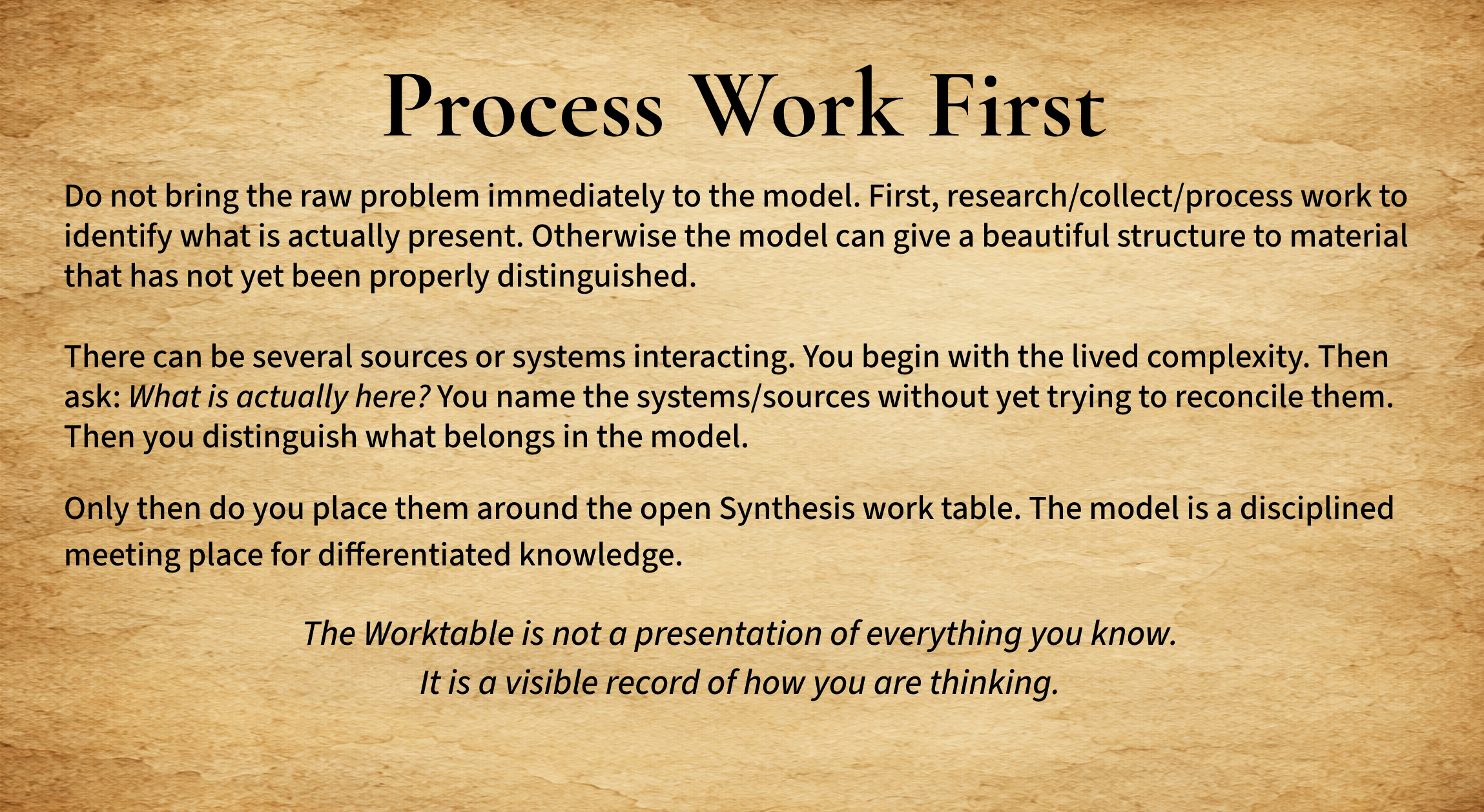 Image 2 of 5
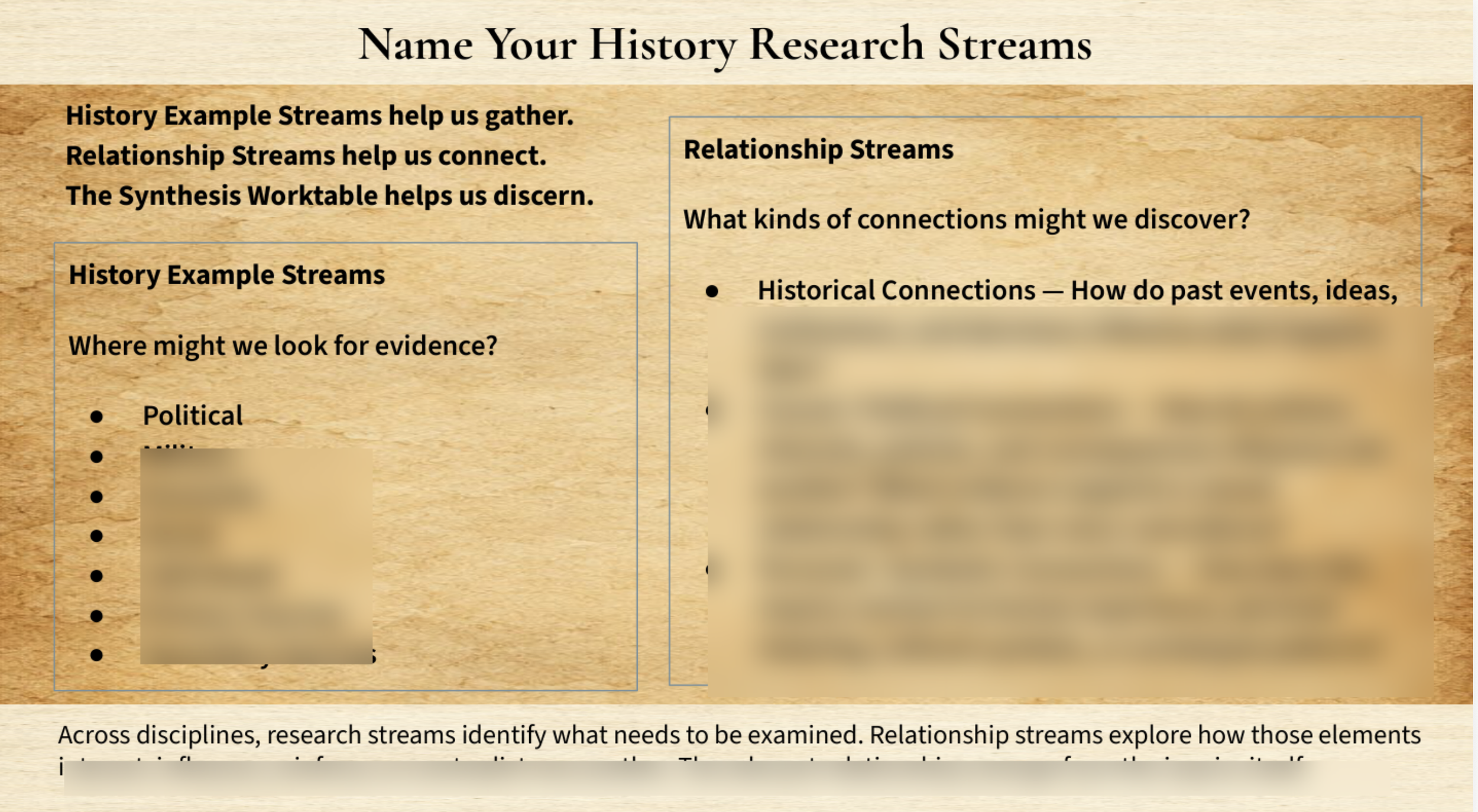 Image 3 of 5
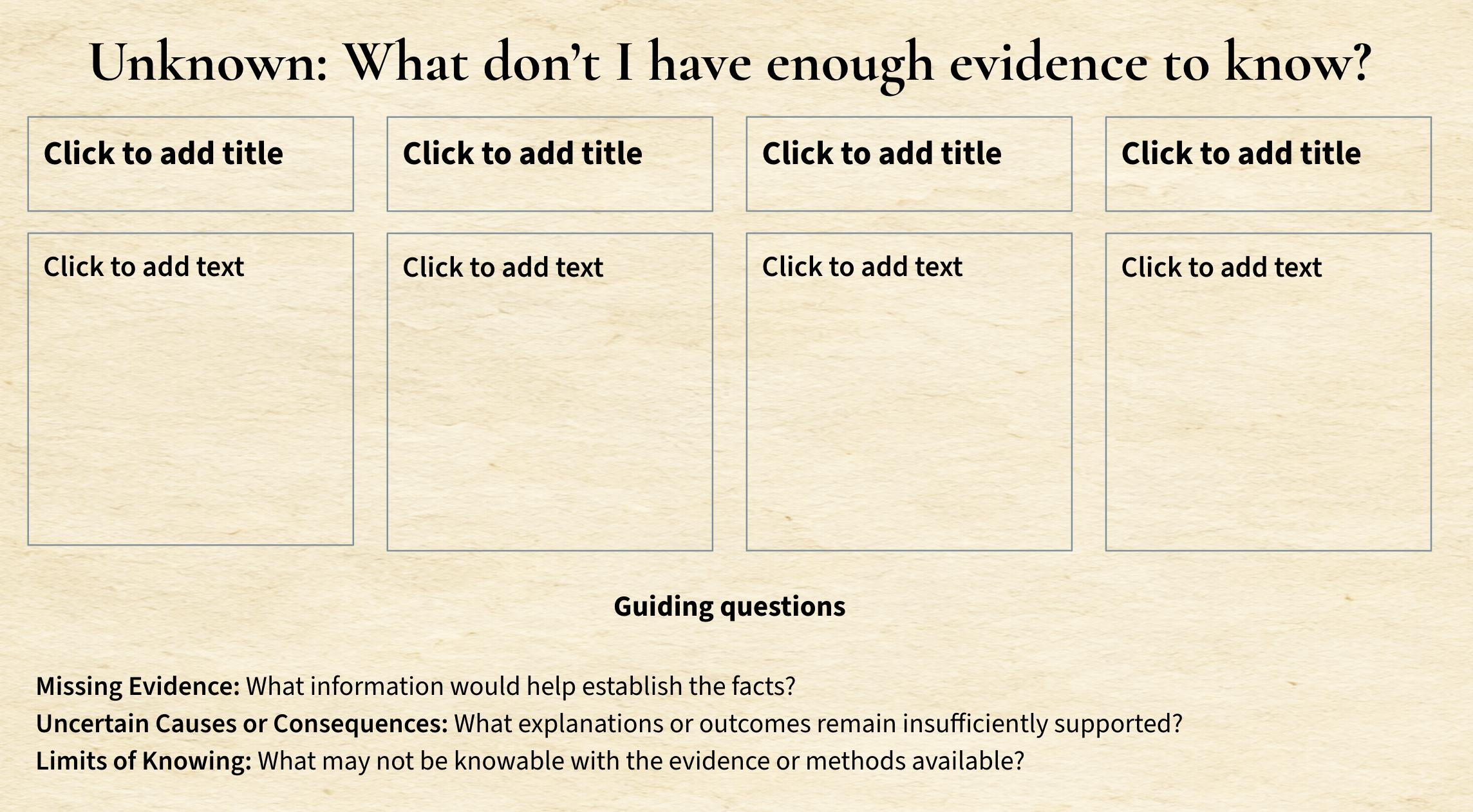 Image 4 of 5
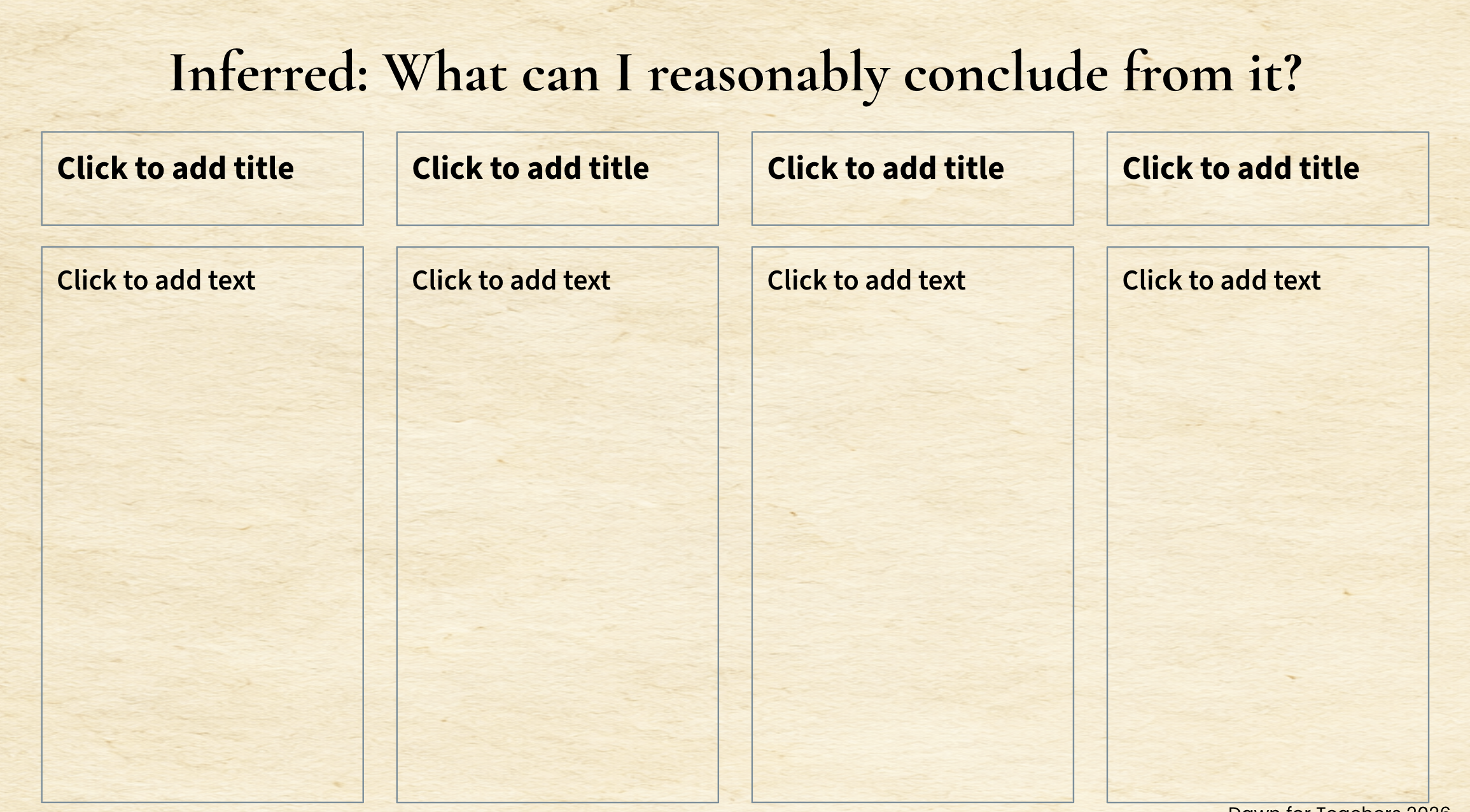 Image 5 of 5
Method of the Great Synthesizer | Interactive Research Worktable & Model
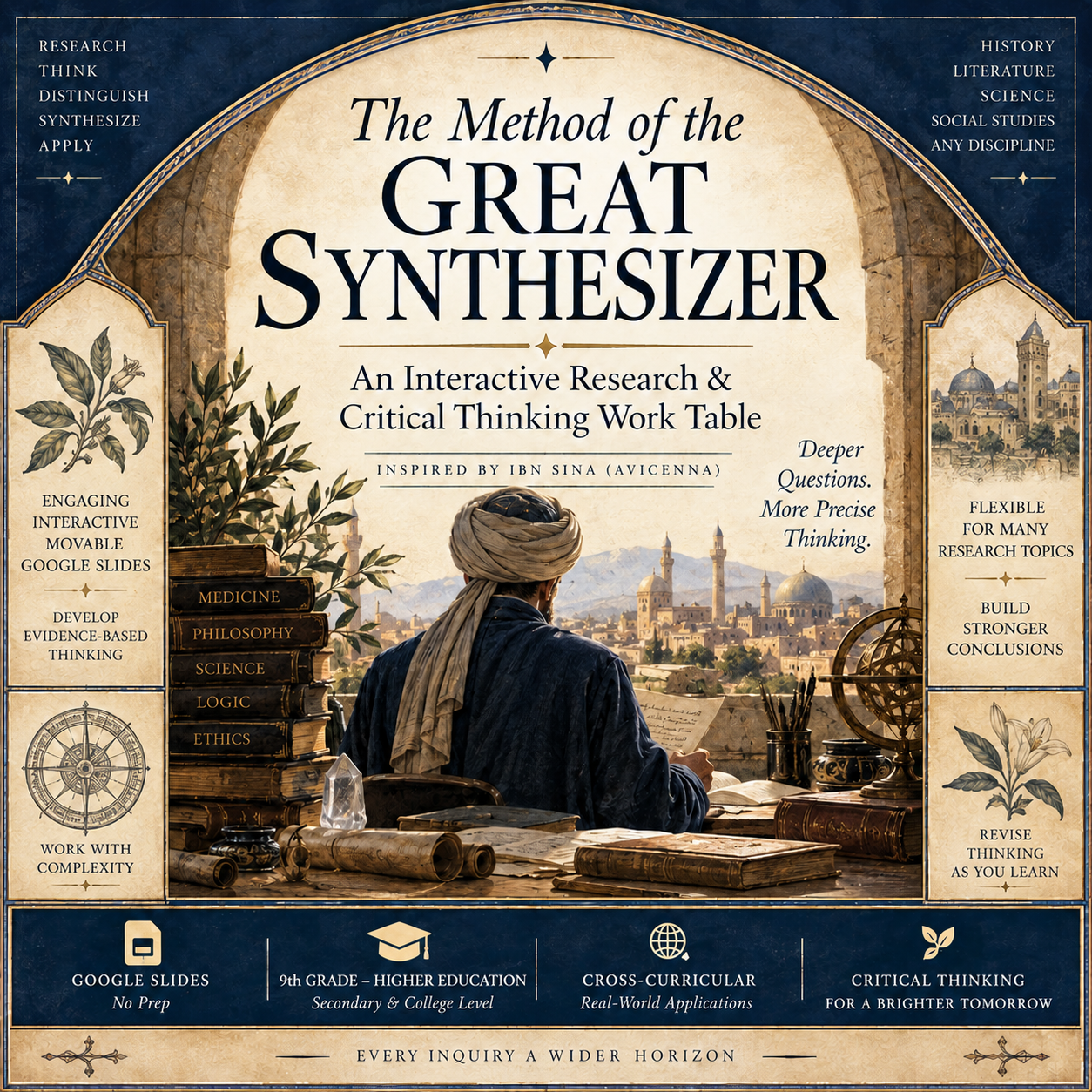
A powerful yet accessible method for navigating complex research, distinguishing evidence from inference, and developing thoughtful, well-supported conclusions. Inspired by Ibn Sina (Avicenna), the Great Synthesizer.
The Method of the Great Synthesizer is more than a research organizer. It is an interactive Google Slides worktable with movable research elements, designed to help students recognize what they know, what they can reasonably conclude, how information connects, and what remains unresolved or unknown.
Students begin with researched materials, identify the different streams of knowledge interacting in their inquiry, and then sort, move, reconsider, and reorganize their findings according to their evidential status.
The worktable guides students through five essential distinctions.
October 2026 Completed Student Model: The Iran Conflict (including sources) Brought to the Worktable
A 12-slide model application demonstrates how the Method of the Great Synthesizer can be used to investigate a complex contemporary issue involving history, politics, international relations, economics, and competing interpretations of evidence.
Using the Iran conflict as a case study, the model illustrates how to:
Separate documented events and evidence from interpretations and inferences.
Identify historical, political, economic, and cultural connections.
Examine contradictory information, competing interests, and unresolved questions.
Recognize the limits of available knowledge without forcing premature conclusions.
Synthesize findings, determine a proportionate response, and identify what requires further investigation.
The model does not attempt to settle the conflict or prescribe a political position. Instead, it demonstrates disciplined inquiry in the presence of complexity, uncertainty, and competing perspectives.
Teachers can use the completed example to introduce the method, model the thinking process, or facilitate discussion before students undertake their own investigations.
The 6-Step Iterative Method
Process — Research, collect, and identify what is actually present.
Name the Streams — Identify the different sources, systems, or kinds of knowledge interacting in the question.
Distinguish — Sort and move research according to the five forms of knowledge in the worktable.
Synthesize — Bring differentiated knowledge together and determine what can responsibly be said.
Respond Proportionately — Develop a claim, decision, design, action, or response that does not exceed what the evidence supports.
Reassess — Reconsider conclusions as new information, results, actions, or questions emerge.
Thinking Becomes Visible—and Revisable
As understanding develops, research elements can be moved, reconsidered, and reorganized. Students learn that revising their thinking is not a mistake but an essential part of responsible inquiry.
Rather than rushing toward a conclusion, students practice distinguishing what evidence establishes from what it merely suggests, recognizing meaningful relationships, and identifying questions that remain open.
The goal is not simply to collect more information. It is to become more precise about what the information allows us to say.
Reusable Across Disciplines
Suitable for grades 9 through higher education, including:
Historical research and inquiry
Literary analysis
Science and health investigations
Engineering and design problems
Interdisciplinary research projects
Complex questions involving multiple sources, perspectives, or forms of evidence
Digital Google Slides resource | Interactive, movable worktable | Completed 12-slide model | Reusable for multiple inquiries
Includes Learning Goals, Essential Questions, Sources, and more.
Inspired by the intellectual legacy of Ibn Sina (Avicenna), whose work brought together knowledge across disciplines.
Method of the Great Synthesizer | Interactive Research Worktable & Model
A powerful yet accessible method for navigating complex research, distinguishing evidence from inference, and developing thoughtful, well-supported conclusions. Inspired by Ibn Sina (Avicenna), the Great Synthesizer.
The Method of the Great Synthesizer is more than a research organizer. It is an interactive Google Slides worktable with movable research elements, designed to help students recognize what they know, what they can reasonably conclude, how information connects, and what remains unresolved or unknown.
Students begin with researched materials, identify the different streams of knowledge interacting in their inquiry, and then sort, move, reconsider, and reorganize their findings according to their evidential status.
The worktable guides students through five essential distinctions.
October 2026 Completed Student Model: The Iran Conflict (including sources) Brought to the Worktable
A 12-slide model application demonstrates how the Method of the Great Synthesizer can be used to investigate a complex contemporary issue involving history, politics, international relations, economics, and competing interpretations of evidence.
Using the Iran conflict as a case study, the model illustrates how to:
Separate documented events and evidence from interpretations and inferences.
Identify historical, political, economic, and cultural connections.
Examine contradictory information, competing interests, and unresolved questions.
Recognize the limits of available knowledge without forcing premature conclusions.
Synthesize findings, determine a proportionate response, and identify what requires further investigation.
The model does not attempt to settle the conflict or prescribe a political position. Instead, it demonstrates disciplined inquiry in the presence of complexity, uncertainty, and competing perspectives.
Teachers can use the completed example to introduce the method, model the thinking process, or facilitate discussion before students undertake their own investigations.
The 6-Step Iterative Method
Process — Research, collect, and identify what is actually present.
Name the Streams — Identify the different sources, systems, or kinds of knowledge interacting in the question.
Distinguish — Sort and move research according to the five forms of knowledge in the worktable.
Synthesize — Bring differentiated knowledge together and determine what can responsibly be said.
Respond Proportionately — Develop a claim, decision, design, action, or response that does not exceed what the evidence supports.
Reassess — Reconsider conclusions as new information, results, actions, or questions emerge.
Thinking Becomes Visible—and Revisable
As understanding develops, research elements can be moved, reconsidered, and reorganized. Students learn that revising their thinking is not a mistake but an essential part of responsible inquiry.
Rather than rushing toward a conclusion, students practice distinguishing what evidence establishes from what it merely suggests, recognizing meaningful relationships, and identifying questions that remain open.
The goal is not simply to collect more information. It is to become more precise about what the information allows us to say.
Reusable Across Disciplines
Suitable for grades 9 through higher education, including:
Historical research and inquiry
Literary analysis
Science and health investigations
Engineering and design problems
Interdisciplinary research projects
Complex questions involving multiple sources, perspectives, or forms of evidence
Digital Google Slides resource | Interactive, movable worktable | Completed 12-slide model | Reusable for multiple inquiries
Includes Learning Goals, Essential Questions, Sources, and more.
Inspired by the intellectual legacy of Ibn Sina (Avicenna), whose work brought together knowledge across disciplines.