 Image 1 of 5
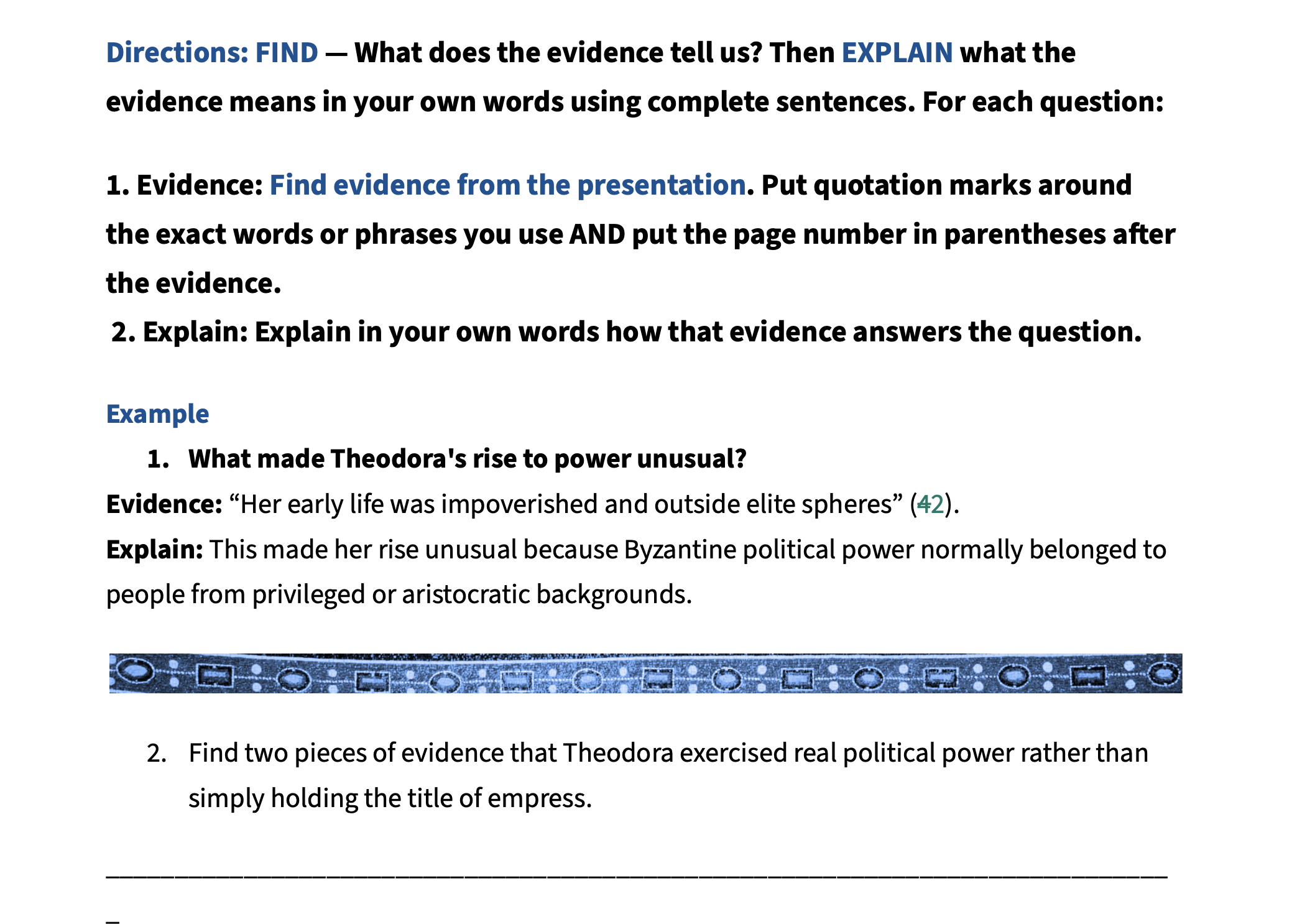 Image 2 of 5
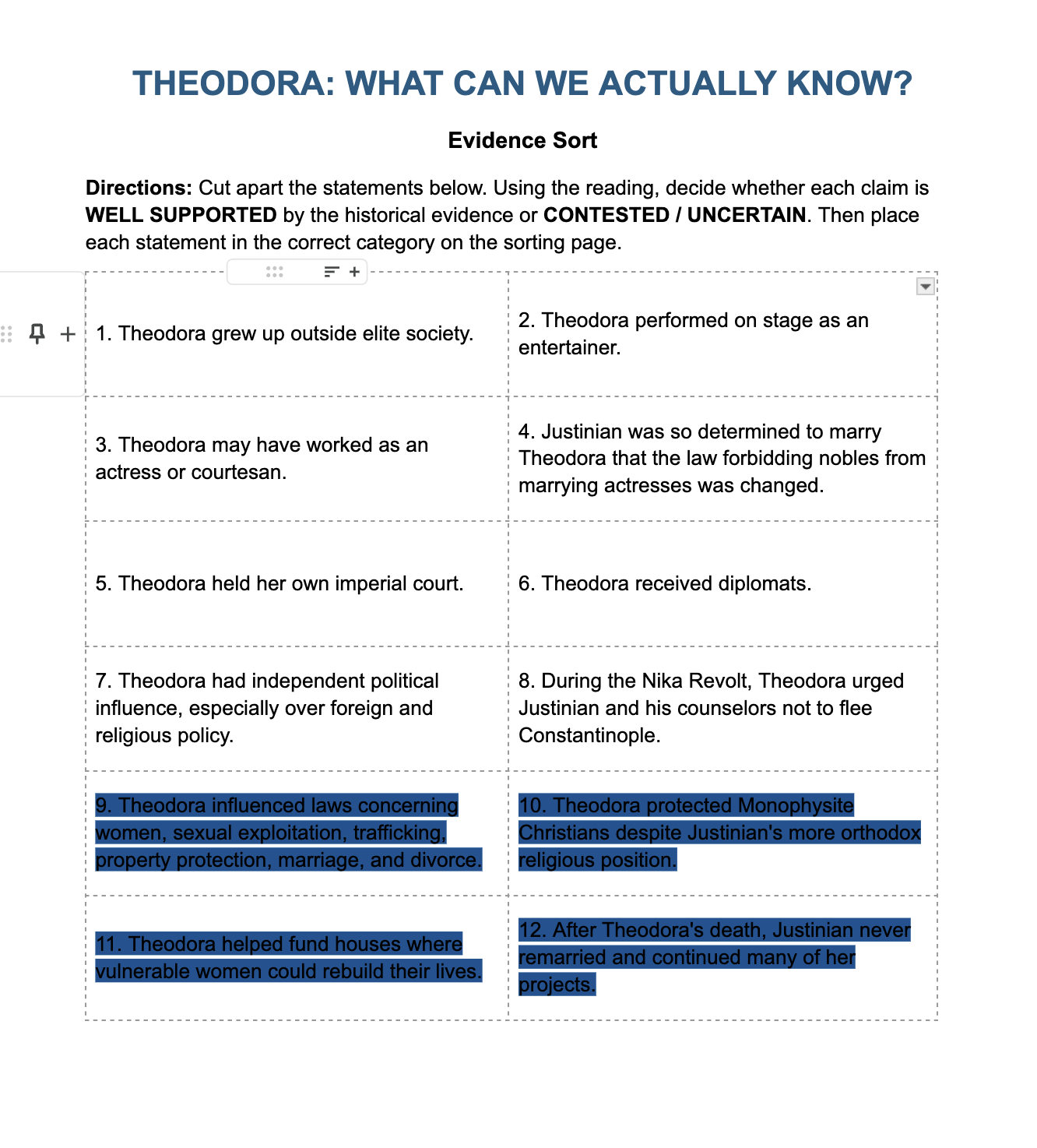 Image 3 of 5
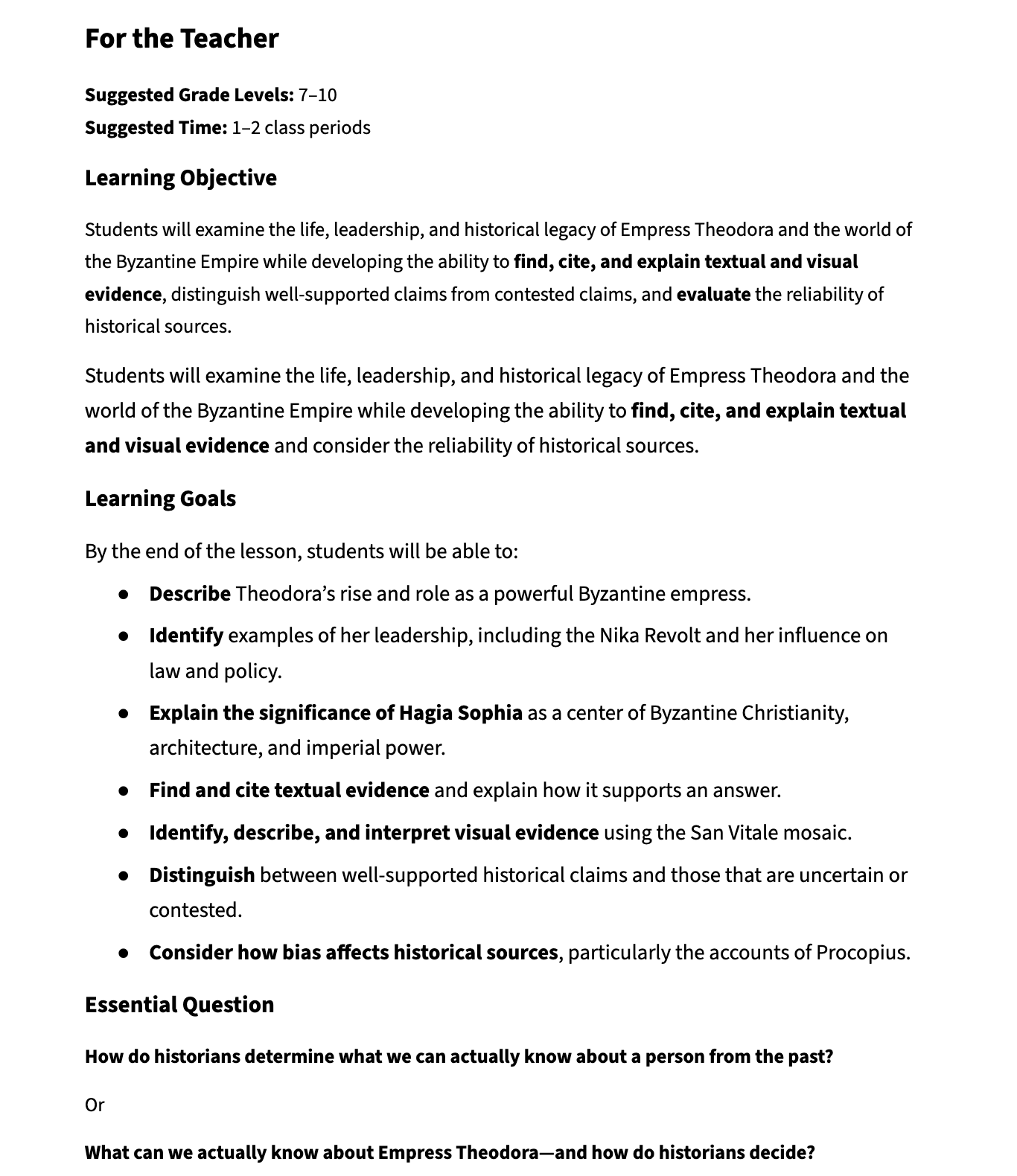 Image 4 of 5
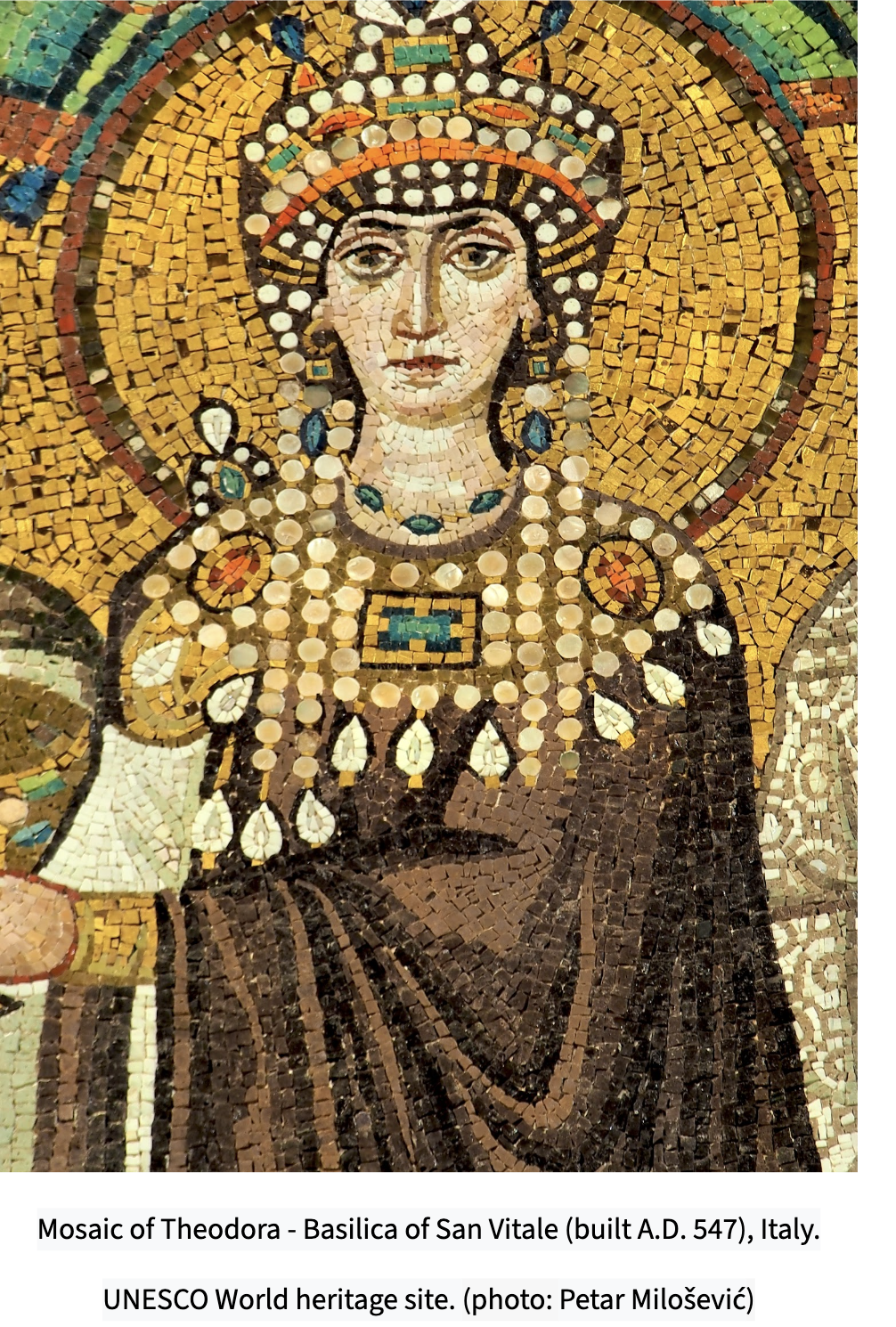 Image 5 of 5
Bring Empress Theodora and the Byzantine Empire to life through a lesson that combines fascinating history with historical evidence, source reliability, visual analysis, and critical thinking.
Students investigate an intriguing question:
What can we actually know about Empress Theodora—and how do historians decide?
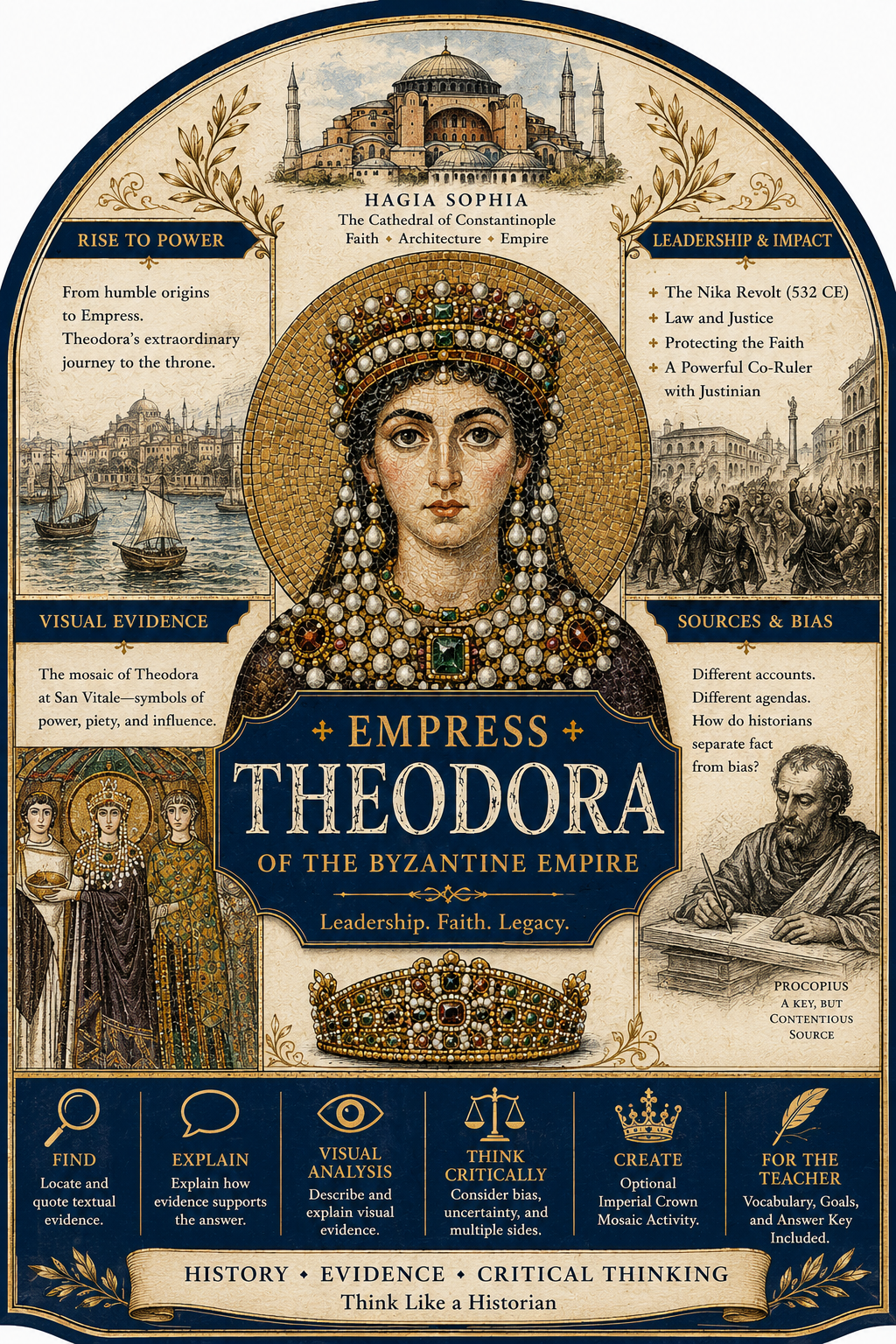
Students learn about Theodora's extraordinary rise from outside the Byzantine elite to her position as a powerful empress alongside Justinian. The lesson explores the Nika Revolt, law and religious policy, the mosaics of San Vitale, and Hagia Sophia while distinguishing between claims about Theodora that are well supported, plausible, or contested.
Because much of what is known about Theodora's early life comes from Procopius—a historian whose accounts include both praise and harsh attacks—students also confront an important problem historians face: How do we evaluate claims when the evidence is limited or the source may be biased? Empress Theodora — Teacher Less…
FIND + EXPLAIN
The FIND + EXPLAIN activity moves students beyond simple reading comprehension. Students locate and quote evidence, cite the page number, and then explain in their own words how the evidence supports their answer.
Students also practice using visual evidence with the famous San Vitale mosaic of Theodora. A student-friendly method teaches them to move from:
What do you see? → What does it mean?
Rather than “quoting” an image, students identify specific visual details and explain what those details communicate about Theodora's status and power.
Historical Evidence Sort
After completing the evidence work, students work with a partner to cut, discuss, classify, and paste historical claims about Theodora into two categories:
WELL SUPPORTED
or
CONTESTED / UNCERTAIN
Students must return to the reading, discuss disagreements, and decide what the available evidence actually supports.
The activity concludes with an individual Think Like a Historian response in which students explain why historians should be cautious about accepting a contested claim as fact.
This hands-on activity turns source reliability and historical uncertainty into something students can actually see, discuss, and evaluate.
Students will:
Examine Theodora's rise, leadership, policies, and legacy
Find, quote, and cite textual evidence
Explain how evidence supports a historical conclusion
Identify, describe, and interpret visual evidence
Distinguish between well-supported and contested historical claims
Consider bias, uncertainty, and source reliability
Collaborate to evaluate historical evidence
Defend historical reasoning in an individual written response
Designed for teacher-led instruction with opportunities for independent and collaborative student work. The historical background and evidence students need are contained within the resource.
Great for: Byzantine Empire units, Medieval World History, Justinian and Theodora, historical thinking, source reliability, evidence practice, visual source analysis, and critical thinking.
Students don't just learn about Theodora—they practice thinking like historians.What's Included
Empress Theodora Reading / Lesson
FIND + EXPLAIN Student Worksheet
San Vitale Visual Evidence Analysis
What Can We Actually Know? Evidence Cut-and-Sort Activity
Well Supported / Contested & Uncertain Sorting Mat
Think Like a Historian Individual Written Response
Optional Imperial Crown Mosaic Coloring Activity
Teacher Materials: Essential Question, Materials, Suggested Lesson Sequence, Learning Objective, Learning Goals, Key Vocabulary with Definitions, and Answer Keys
Bring Empress Theodora and the Byzantine Empire to life through a lesson that combines fascinating history with historical evidence, source reliability, visual analysis, and critical thinking.
Students investigate an intriguing question:
What can we actually know about Empress Theodora—and how do historians decide?
Students learn about Theodora's extraordinary rise from outside the Byzantine elite to her position as a powerful empress alongside Justinian. The lesson explores the Nika Revolt, law and religious policy, the mosaics of San Vitale, and Hagia Sophia while distinguishing between claims about Theodora that are well supported, plausible, or contested.
Because much of what is known about Theodora's early life comes from Procopius—a historian whose accounts include both praise and harsh attacks—students also confront an important problem historians face: How do we evaluate claims when the evidence is limited or the source may be biased? Empress Theodora — Teacher Less…
FIND + EXPLAIN
The FIND + EXPLAIN activity moves students beyond simple reading comprehension. Students locate and quote evidence, cite the page number, and then explain in their own words how the evidence supports their answer.
Students also practice using visual evidence with the famous San Vitale mosaic of Theodora. A student-friendly method teaches them to move from:
What do you see? → What does it mean?
Rather than “quoting” an image, students identify specific visual details and explain what those details communicate about Theodora's status and power.
Historical Evidence Sort
After completing the evidence work, students work with a partner to cut, discuss, classify, and paste historical claims about Theodora into two categories:
WELL SUPPORTED
or
CONTESTED / UNCERTAIN
Students must return to the reading, discuss disagreements, and decide what the available evidence actually supports.
The activity concludes with an individual Think Like a Historian response in which students explain why historians should be cautious about accepting a contested claim as fact.
This hands-on activity turns source reliability and historical uncertainty into something students can actually see, discuss, and evaluate.
Students will:
Examine Theodora's rise, leadership, policies, and legacy
Find, quote, and cite textual evidence
Explain how evidence supports a historical conclusion
Identify, describe, and interpret visual evidence
Distinguish between well-supported and contested historical claims
Consider bias, uncertainty, and source reliability
Collaborate to evaluate historical evidence
Defend historical reasoning in an individual written response
Designed for teacher-led instruction with opportunities for independent and collaborative student work. The historical background and evidence students need are contained within the resource.
Great for: Byzantine Empire units, Medieval World History, Justinian and Theodora, historical thinking, source reliability, evidence practice, visual source analysis, and critical thinking.
Students don't just learn about Theodora—they practice thinking like historians.What's Included
Empress Theodora Reading / Lesson
FIND + EXPLAIN Student Worksheet
San Vitale Visual Evidence Analysis
What Can We Actually Know? Evidence Cut-and-Sort Activity
Well Supported / Contested & Uncertain Sorting Mat
Think Like a Historian Individual Written Response
Optional Imperial Crown Mosaic Coloring Activity
Teacher Materials: Essential Question, Materials, Suggested Lesson Sequence, Learning Objective, Learning Goals, Key Vocabulary with Definitions, and Answer Keys