 Image 1 of 4
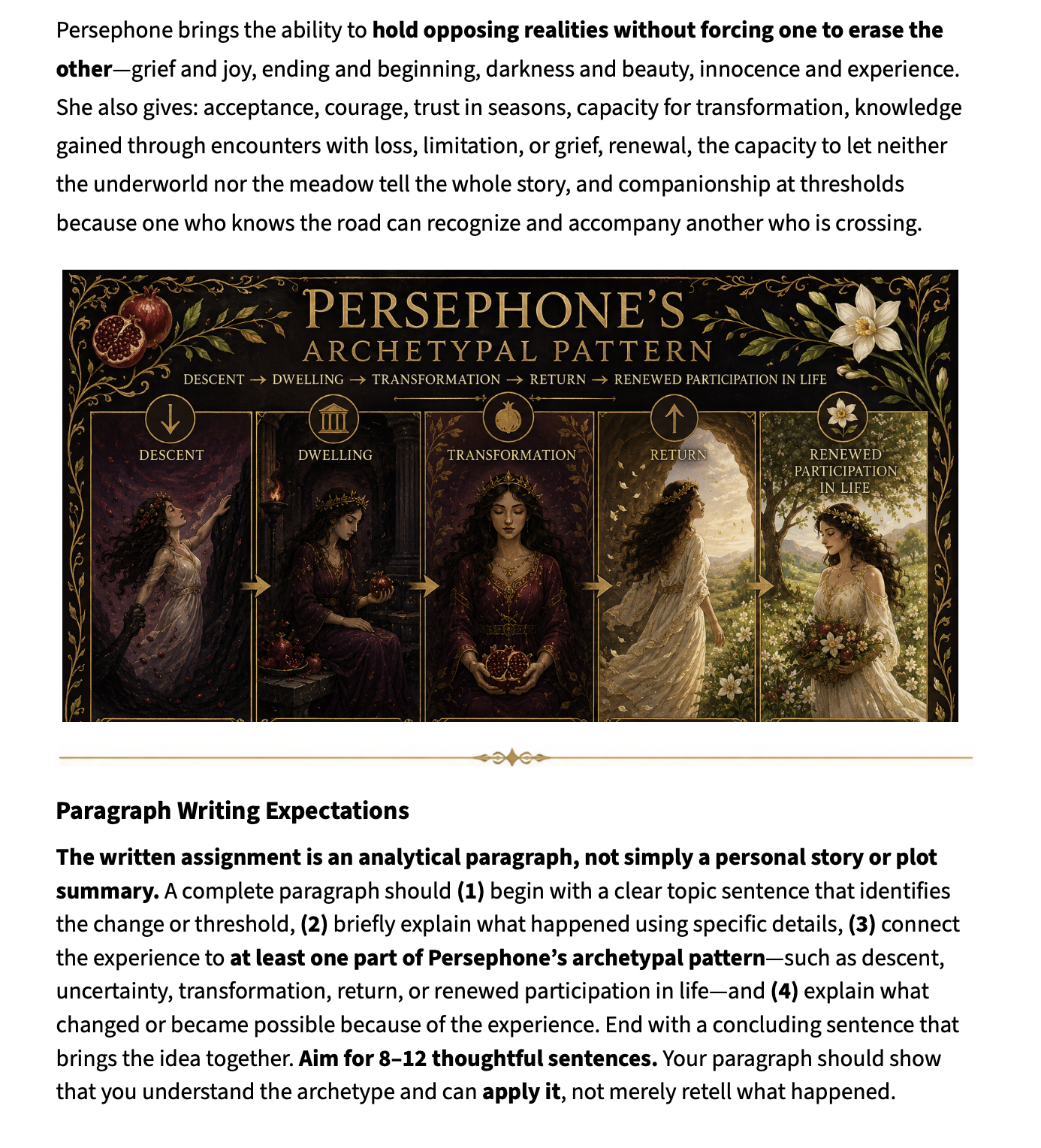 Image 2 of 4
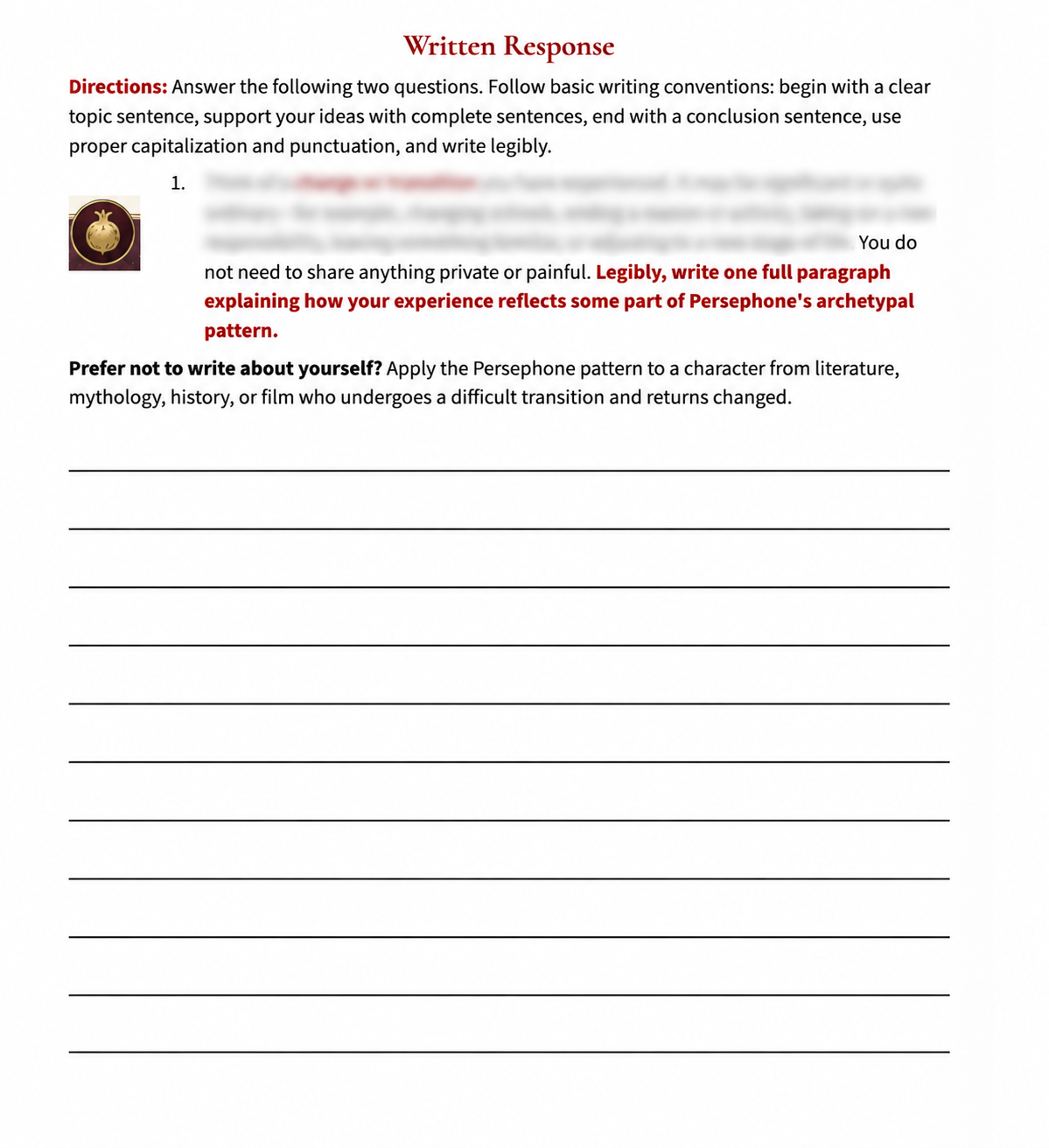 Image 3 of 4
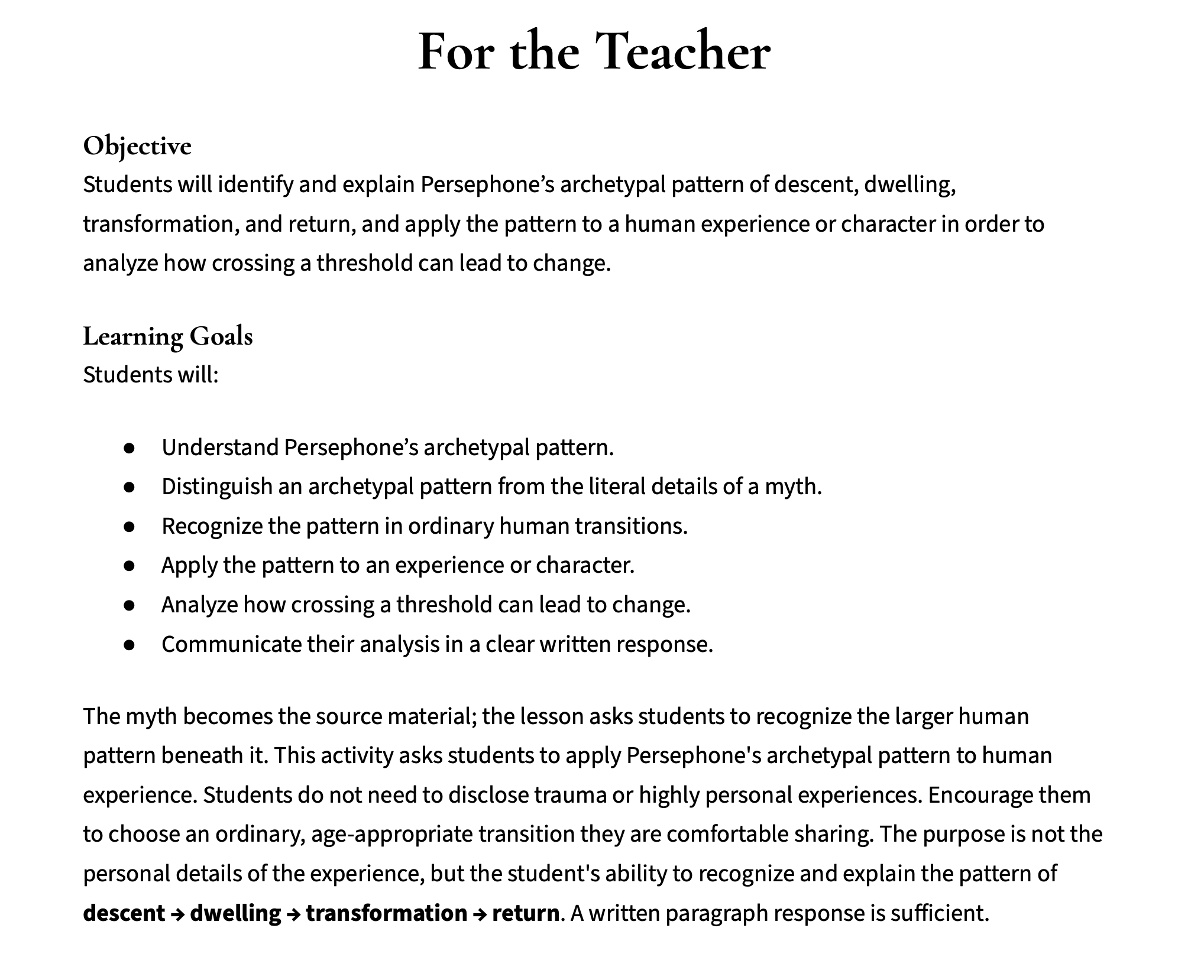 Image 4 of 4
Take students beyond the plot of Persephone’s myth and into archetype, critical thinking, and meaningful written analysis.
This interdisciplinary Persephone archetype lesson invites students to examine the ancient myth as more than a story about the seasons. Students explore how Persephone can represent a larger pattern of change, transition, transformation, and return, then apply that understanding to human experience through analytical and reflective thinking.
Designed for high school ELA, World History, humanities, mythology, psychology, and interdisciplinary classrooms, this resource works especially well alongside a reading or retelling of the myth of Persephone and Demeter. Rather than focusing primarily on recall or mythology comprehension, the lesson asks students to move from myth → archetype → interpretation → application. That progression reflects the central purpose of the resource: recognizing the human pattern beneath the myth.
Students consider themes including identity, thresholds, change, loss and renewal, maturity, resilience, and the ways experiences can change how we participate in life. They also briefly distinguish Persephone’s archetypal pattern from the familiar Hero’s Journey, helping students understand that archetypal patterns can overlap without being identical.
The lesson culminates with two paragraph-length written responses in which students apply their understanding rather than simply repeat information from the myth. Students are given an alternative to personal reflection, allowing them to analyze a character from literature, mythology, history, or film instead.
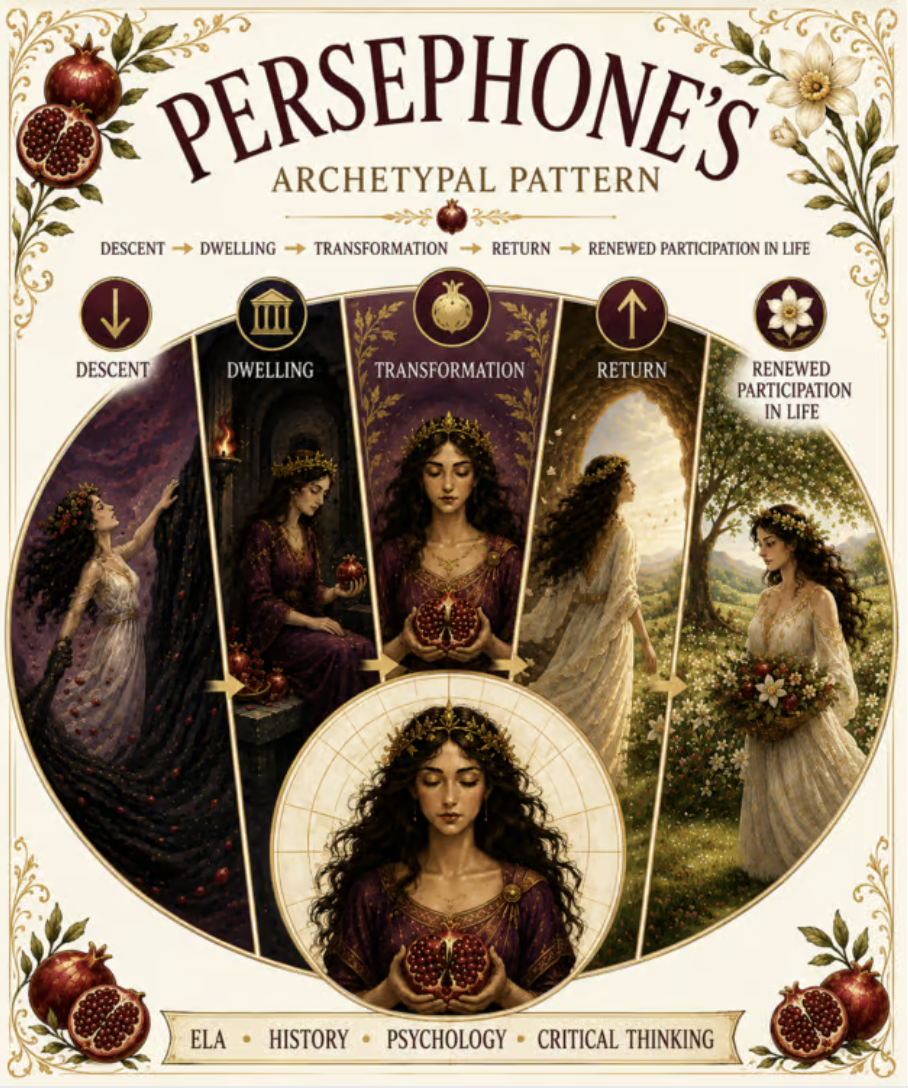
This resource includes: teacher guidance and learning goals, recommended myth sources, archetype instruction and analysis, exploration of human transitions and thresholds, a visual archetypal framework, a student paragraph example, student analytical paragraph expectations, student written-response activities, and a follow-up discussion question.
Please note: This resource is designed to accompany an outside reading of the Persephone myth. A full copy of the myth is not included, allowing teachers to select the translation, primary-source excerpt, textbook reading, or retelling that best fits their course.
Ideal for: Persephone lessons, archetype lessons, Greek mythology analysis, mythology in ELA, World History enrichment, literary analysis, critical thinking, analytical writing, psychology and literature connections, humanities, and interdisciplinary instruction.
Suggested Grades: 9–12 Appropriate for general, honors, and advanced high-school classes.
Take students beyond the plot of Persephone’s myth and into archetype, critical thinking, and meaningful written analysis.
This interdisciplinary Persephone archetype lesson invites students to examine the ancient myth as more than a story about the seasons. Students explore how Persephone can represent a larger pattern of change, transition, transformation, and return, then apply that understanding to human experience through analytical and reflective thinking.
Designed for high school ELA, World History, humanities, mythology, psychology, and interdisciplinary classrooms, this resource works especially well alongside a reading or retelling of the myth of Persephone and Demeter. Rather than focusing primarily on recall or mythology comprehension, the lesson asks students to move from myth → archetype → interpretation → application. That progression reflects the central purpose of the resource: recognizing the human pattern beneath the myth.
Students consider themes including identity, thresholds, change, loss and renewal, maturity, resilience, and the ways experiences can change how we participate in life. They also briefly distinguish Persephone’s archetypal pattern from the familiar Hero’s Journey, helping students understand that archetypal patterns can overlap without being identical.
The lesson culminates with two paragraph-length written responses in which students apply their understanding rather than simply repeat information from the myth. Students are given an alternative to personal reflection, allowing them to analyze a character from literature, mythology, history, or film instead.
This resource includes: teacher guidance and learning goals, recommended myth sources, archetype instruction and analysis, exploration of human transitions and thresholds, a visual archetypal framework, a student paragraph example, student analytical paragraph expectations, student written-response activities, and a follow-up discussion question.
Please note: This resource is designed to accompany an outside reading of the Persephone myth. A full copy of the myth is not included, allowing teachers to select the translation, primary-source excerpt, textbook reading, or retelling that best fits their course.
Ideal for: Persephone lessons, archetype lessons, Greek mythology analysis, mythology in ELA, World History enrichment, literary analysis, critical thinking, analytical writing, psychology and literature connections, humanities, and interdisciplinary instruction.
Suggested Grades: 9–12 Appropriate for general, honors, and advanced high-school classes.